Axiora Medical
Global buyers evaluating Cancellous Screws in 2026 face a demanding balance between clinical performance, traceability, and total procurement cost. These implants are designed for softer, porous bone, where thread geometry and purchase depth can directly influence fixation quality. A screw that looks polished on a catalogue page may still perform poorly if its core diameter, pitch, or insertion profile does not match the surgical indication.
The global orthopedic devices market continues to expand. Grand View Research has projected sustained growth through the decade, supported by aging populations, fracture treatment, and sports-related injuries. MarketsandMarkets has also identified trauma and orthopedic implants as major segments within the broader medical device industry. However, market growth is not proof of product quality. Buyers should examine fatigue testing, material certificates, sterilization validation, coating information, and clinical documentation. Small details matter.
Look beyond price.
ISO 13485 certification, ISO 5832 material compliance, and a well-documented quality system can strengthen supplier evaluation. Regulatory clearance should also be checked within each target market, because approval pathways differ across regions. FDA records, European technical documentation, and national registration databases provide useful verification points, but they do not replace clinical judgment.
This guide compares Cancellous Screws through a practical global-buying lens. It considers thread design, alloy options, instrument compatibility, packaging, lead times, and after-sales support. Some supplier claims remain difficult to compare directly. That is an uncomfortable limitation. Therefore, procurement teams should request samples, independent test reports, and surgeon feedback before approving large-volume purchases.
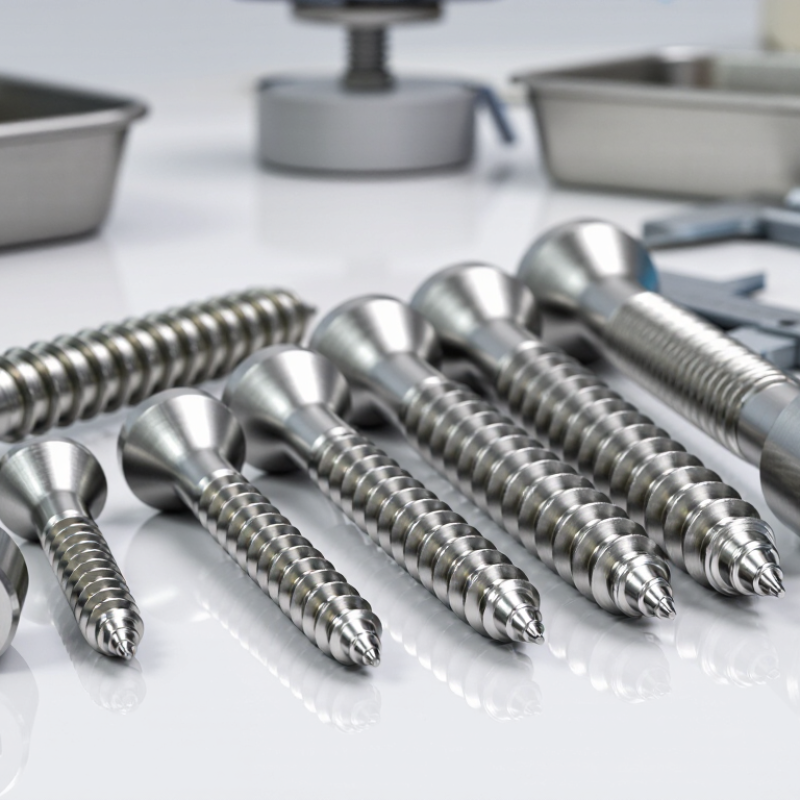
Cancellous screws are orthopedic fixation devices designed for softer, porous bone. Their deep, widely spaced threads improve purchase in cancellous bone, especially near joint surfaces. A typical design includes a large thread diameter, a relatively narrow core, and a self-tapping tip. Some models are partially threaded, allowing controlled interfragmentary compression. Fully threaded versions can support positioning without compression.
The distinction sounds simple, but it is not. Screw length, pitch, diameter, head shape, and thread depth must match the fracture pattern and bone quality. In metaphyseal regions, excessive insertion torque may damage fragile trabeculae. Surgeons may use washers when the cortex is thin or the screw head could sink. Common applications include ankle, tibial plateau, distal radius, and pelvic fracture fixation. Clinical decisions require imaging, instrument compatibility, and surgeon judgment.
The World Health Organization reports that about 1.71 billion people live with musculoskeletal conditions worldwide. The Global Burden of Disease Study 2021 also identifies fractures as a major source of disability. These figures support continuing demand for dependable fixation systems, but they do not define the best screw. Material quality, sterilization validation, fatigue performance, and regulatory documentation still matter. Buyers should review test methods and clinical evidence, not only catalog dimensions. A weakness remains in many market comparisons: laboratory results may not predict performance in osteoporotic bone. That limitation deserves attention.
For global buyers, cancellous screw selection starts with material, not price. Titanium alloy offers low density, strong corrosion resistance, and useful MRI compatibility. Stainless steel provides high strength and familiar surgical handling. ASTM F136 covers titanium alloy requirements, while ASTM F138 addresses implant-grade stainless steel. Buyers should request heat-treatment records, chemical analysis, and traceability documents.
Thread design controls purchase risk. Deep, widely spaced threads can improve purchase in soft cancellous bone. A sharp tip may support easier insertion, but excessive sharpness can damage surrounding tissue. Partial threads allow compression across a fracture. Full threads provide stronger fixation when compression is not the main objective. Common diameters range from 4.0 to 7.3 millimeters, with lengths often spanning 20 to 100 millimeters. Actual sizes depend on anatomy and surgical technique.
Structure matters under the operating light. A low-profile head can reduce tissue irritation. A spherical underside may improve compression control. Hexagonal or star-shaped drives reduce stripping during insertion. ISO 5835 and related national standards help define screw geometry and testing expectations. Recent 2024 reports from Grand View Research and Fortune Business Insights place the global orthopedic implants market near US$45 billion in 2023, with growth close to 5% annually. These reports usually combine many implant categories. They do not isolate cancellous screws perfectly. That limitation deserves attention.
A perfect screw does not exist. Manufacturers should still validate fatigue strength, dimensional accuracy, surface finish, and packaging integrity before approval.
2026 Best Cancellous Screws for Global Buyers?
Comparing cancellous screws starts with bone quality, fracture location, and the required fixation effect. Cancellous threads are wider and deeper than cortical threads. They are designed for softer metaphyseal bone. A partially threaded screw can create interfragmentary compression when its threads cross only the far fragment. A fully threaded option may provide better positioning without compression. That difference matters around the ankle, wrist, and proximal humerus.
The Global Burden of Disease 2019 study reported 178 million new fractures worldwide. Many involve fragile metaphyseal bone. For osteoporotic fixation, buyers should examine thread depth, core diameter, insertion torque, and pull-out performance. ASTM F543 provides standardized methods for testing metallic bone screws. However, laboratory strength does not perfectly predict clinical stability. The largest diameter is not automatically the safest choice.
Cannulated screws can improve guidewire accuracy, especially during minimally invasive procedures. Yet their hollow core may reduce fatigue strength compared with solid designs. Washers can help distribute load in thin cortical regions, but they may irritate soft tissue. Material selection also deserves attention. Titanium alloys can reduce imaging artifacts, while stainless steel often offers higher stiffness. AO Surgery Reference emphasizes matching screw length, thread position, and compression goals to the fracture pattern. A careful comparison should include sterilization status, documentation, traceability, and regulatory clearance for the target market. One detail is easy to overlook: surgeon preference can influence outcomes as much as catalog specifications.
The chart compares commonly used nominal cancellous screw diameters with representative surgical contexts. Smaller diameters are generally considered for small-bone or limited-space fixation, while larger diameters are commonly selected when greater purchase and load-sharing capacity are required. Final selection should also consider bone quality, anatomy, thread design, screw length, cannulation, fracture pattern, and the applicable surgical system or regulatory requirements.
For global buyers, cancellous screw quality begins with measurable performance, not catalogue photographs. MarketsandMarkets’ 2024 Orthopedic Devices Market report valued the sector at about USD 47.4 billion and projected continued growth through 2029. That expansion increases supplier choice, but also complicates technical screening. Ask for ASTM F543 testing, dimensional records, torque data, and batch-level traceability. ISO 13485 certification supports controlled manufacturing, while ISO 10993 evidence addresses biological safety. A certificate alone is not proof of fit.
A practical review should examine thread depth, pitch, core diameter, cannulation, and drive geometry. These details affect purchase, insertion torque, and resistance to pullout in softer bone. For titanium or stainless-steel products, request material certificates and surface-finish controls. ISO 14971 risk-management documentation should connect design hazards with testing and corrective actions. Under EU MDR, the supplier should clearly identify device classification, conformity evidence, and post-market surveillance responsibilities. Requirements differ by destination.
Check the actual samples.
I would also compare sterilization validation, packaging integrity, shelf-life data, and complaint history. The WHO’s Global Status Report on Physical Activity 2022 linked inadequate activity to major global health risks, reinforcing long-term demand for musculoskeletal care, but demand must not replace evidence. Some suppliers present impressive laboratory results without explaining test fixtures or failure limits. That is a weakness worth challenging. Independent audits, lot-based inspection, and surgeon feedback provide stronger assurance than polished brochures. Supplier response time matters too, especially when a technical document is incomplete.
In 2026, cancellous screw selection will depend more on bone quality than catalog size. The World Health Organization reports that musculoskeletal conditions affect about 1.71 billion people worldwide. Aging populations will increase demand for fixation solutions, especially in fragile metaphyseal bone. The United Nations projects that people aged 65 and above may represent 16% of the global population by 2050. This trend supports stronger interest in thread design, insertion control, and reliable purchase.
Professional buyers should compare diameter, thread depth, core strength, head geometry, and available lengths. ASTM F543 provides mechanical testing guidance for metallic bone screws, while ISO 5835 addresses specific screw dimensions and performance requirements. These standards do not replace clinical judgment. A screw with deeper threads may improve grip in soft cancellous bone, but it can also increase insertion resistance. Material selection matters too. Titanium may reduce imaging interference, while stainless steel often offers familiar handling and high strength. I would not treat one feature as universally superior. That assumption needs review.
Tips: Check radiographs before ordering mixed sizes. Match thread length to the actual cancellous zone, not the total bone length. Ask suppliers for sterilization validation, fatigue data, traceability, and recent quality certificates. Review data from the WHO and United Nations, but verify every supplier claim independently. A low price can hide limited training support or inconsistent packaging. Selection should remain evidence-led, practical, and transparent.
| Selection Dimension | Representative Data or Range | Why It Matters in 2026 | Buyer Evaluation Criteria |
|---|---|---|---|
| Primary clinical use | Fixation in metaphyseal and epiphyseal cancellous bone, including fractures, osteotomies, and selected arthrodesis procedures | Demand is increasingly focused on procedure-specific systems rather than one universal screw size | Confirm intended anatomy, surgeon technique, indication, and compatibility with the complete fixation system |
| Common nominal diameters | Approximately 3.5 mm, 4.0 mm, 4.5 mm, 6.5 mm, and 7.3 mm; availability varies by system | A wider size portfolio supports smaller-fragment, standard, and high-load fixation strategies | Compare major diameter, core diameter, thread depth, and actual measured dimensions—not nominal size alone |
| Thread configuration | Coarse, deep cancellous threads; fully threaded or partially threaded designs are both used | Thread geometry strongly affects purchase in low-density bone and control of compression | Select full thread for position or fixation control; select partial thread when controlled interfragmentary compression is required |
| Thread pitch and depth | Typically coarser and deeper than cortical-screw threading; exact values are design-specific | Optimized thread volume can improve bone engagement while limiting excessive insertion torque | Request engineering drawings, insertion-torque data, pull-out testing, and recommended drilling and tapping parameters |
| Available screw lengths | Common system ranges are approximately 10–120 mm, with increments often between 2 mm and 5 mm | More length options help reduce protrusion, improve purchase, and support anatomy-specific fixation | Check effective thread length, total length tolerance, calibration markings, and availability of intermediate sizes |
| Head design | Low-profile or standard heads; options may include conical, spherical, or countersunk undersurfaces | Head geometry influences soft-tissue clearance, load distribution, and use with washers or plates | Verify head diameter, height, seating angle, washer compatibility, and countersink requirements |
| Drive interface | Hexagonal or star-style internal drives are common; drive size must match the approved instrument | Secure drive engagement reduces stripping, improves insertion control, and supports minimally invasive techniques | Assess recess depth, driver engagement length, stripping resistance, and instrument availability in the destination market |
| Tip configuration | Blunt, rounded, or self-tapping tips may be offered; tip performance depends on bone quality and technique | Tip design affects insertion force, trajectory control, and risk of unintended advancement | Confirm whether pilot drilling or tapping is required and review insertion-force and tip-strength test results |
| Typical implant materials | Titanium alloy such as Ti-6Al-4V ELI, or implant-grade stainless steel such as 316L, depending on system design | Material selection balances strength, corrosion resistance, imaging characteristics, and compatibility with other implants | Request material certificates and verify conformity with applicable implant-material specifications such as ASTM F136 or ASTM F138 |
| Surface finish and coating | Machined or polished surfaces are common; anodized titanium or other surface treatments may be system-specific | Surface condition can affect corrosion behavior, particulate generation, handling, and radiographic visibility | Require coating specifications, adhesion or durability evidence, particulate controls, and confirmation of biological evaluation |
| Mechanical performance | Relevant testing may include insertion torque, removal torque, torsional strength, fatigue, and axial pull-out performance | Global buyers increasingly compare documented performance rather than relying only on dimensional similarity | Request test methods, sample sizes, acceptance criteria, and results generated under ASTM F543 or equivalent validated methods |
| Instrument compatibility | Dedicated drivers, depth gauges, drill guides, taps, countersinks, and washers may be required | Complete-system compatibility reduces operating-room delays and incorrect instrument use | Evaluate tray completeness, sterilization instructions, instrument life, replacement lead time, and backward compatibility |
| Sterile and non-sterile supply | Implants may be supplied sterile or non-sterile; supplied condition and reprocessing limits are product-specific | Hospitals are placing greater emphasis on workflow efficiency, traceability, and validated sterilization processes | Verify sterilization method, sterility assurance level, shelf life, packaging integrity, and validated reprocessing instructions |
| Packaging and traceability | Individual implant identification, lot or batch traceability, UDI where required, and protective packaging are expected | Digital inventory control and product traceability are becoming standard procurement requirements | Check label language, UDI or equivalent identification, barcode quality, lot control, and recall-support procedures |
| Biological and chemical safety | Biocompatibility evaluation should address the finished device, materials, residues, processing agents, and patient contact duration | Regulators and hospital buyers increasingly require risk-based evidence for materials and manufacturing residues | Request biological evaluation documentation aligned with ISO 10993 and applicable chemical, cleaning, and residue controls |
| Quality-management evidence | A certified medical-device quality system, design controls, process validation, and change control are key evidence areas | Regulatory convergence and tighter supplier qualification make auditable quality systems more important for cross-border sourcing | Review current ISO 13485 certification scope, audit status, CAPA controls, supplier controls, and complaint handling |
| Regulatory documentation | Typical documents include technical file or 510(k)-related evidence where applicable, declaration of conformity, risk management file, and clinical evaluation | Market access depends on the destination jurisdiction; no single approval automatically covers every country | Confirm registration pathway, local representative requirements, labeling language, post-market obligations, and import documentation |
| Radiographic and imaging considerations | Titanium generally produces less radiographic artifact than stainless steel, but imaging behavior depends on geometry and modality | Imaging compatibility and artifact reduction are increasingly considered in complex orthopedic follow-up | Request MRI safety information, conditional-use limits, artifact data, and clear labeling for the final implant configuration |
| Supply-chain and purchasing factors | Key variables include minimum order quantity, standard lead time, safety stock, spare instruments, and technical support | Global buyers are prioritizing resilience, multi-region availability, and predictable replenishment | Compare total cost of ownership, not unit price alone; include instruments, validation, freight, duties, training, and replacement parts |
| Recommended 2026 purchasing approach | Shortlist systems using a weighted score for clinical fit, mechanical evidence, regulatory readiness, supply reliability, and lifecycle cost | A documented, risk-based selection process is more reliable than choosing by price, catalog breadth, or nominal dimensions | Complete sample evaluation, surgeon review, instrument trial, document audit, local regulatory check, and post-market monitoring plan |
Note: Dimensional ranges are representative market ranges rather than universal specifications. Final selection must follow the applicable surgical technique, implant instructions for use, regulatory requirements, and verified product documentation.
Titanium alloy is lightweight and corrosion resistant. It may suit many MRI-related environments. Stainless steel offers high strength and familiar handling. Request chemical analysis, heat-treatment records, and lot traceability.
Deep, widely spaced threads can improve purchase in softer bone. Partial threads help create compression across a fracture. Full threads support fixation when compression is not the main goal. Excessively sharp tips may damage nearby tissue.
Common diameters range from 4.0 to 7.3 millimeters. Lengths often range from 20 to 100 millimeters. Actual selection depends on anatomy and surgical technique. Size alone cannot prove suitability.
A low-profile head may reduce tissue irritation. A spherical underside can improve compression control. Hexagonal or star-shaped drives may reduce stripping. Small details matter under the operating light.
Request dimensional records, torque data, fatigue testing, and pullout results. Ask how each test fixture was configured. Failure limits should be clearly stated. Impressive numbers may still lack useful context.
Review material certificates, surface-finish controls, biological safety evidence, and risk-management records. Check sterilization validation and packaging integrity. A certificate is not proof of fit. That distinction is easy to miss.
Inspect actual samples, not only catalogue photographs. Compare lot-based inspection results and complaint histories. Review shelf-life data and audit findings. Slow replies can signal weak technical control.
No. Market reports often combine many orthopedic implant categories. Their figures may not isolate cancellous screws. Demand can guide planning, but evidence must guide approval. The market estimate may still be imperfect.
Cancellous Screws are orthopedic fixation devices designed to stabilize fractures and support bone reconstruction, particularly in areas containing softer, porous bone. Their specialized design may include a larger thread profile, deeper threads, and a reduced core diameter to improve purchase and fixation strength. This guide reviews key materials, thread patterns, sizes, head designs, and structural features, helping buyers understand how screw selection can vary according to anatomy, fracture type, surgical technique, and required stability.
For global buyers in 2026, comparing Cancellous Screws should involve more than price. Important considerations include material quality, dimensional consistency, mechanical performance, sterile packaging, traceability, and compatibility with surgical instruments. Buyers should also evaluate suppliers according to applicable quality-management systems, product certifications, regulatory documentation, production capacity, and after-sales support in their target markets. Emerging trends include improved manufacturing precision, expanded size options, stronger quality control, and more efficient supply-chain services. A careful selection process can support reliable clinical performance, procurement efficiency, and long-term supplier cooperation.
