Axiora Medical
Choosing the 2026 best Cortical Screws requires more than comparing prices or polished product photographs. Global buyers must examine thread design, core diameter, screw length, material quality, and compatibility with the intended fixation system. In practice, a small mismatch can affect insertion control, grip, or surgical workflow. Fit matters. Evidence matters.
This introduction will guide buyers through the details that deserve careful attention. Stainless steel and titanium screws may offer different handling, strength, imaging, and biocompatibility considerations. Thread geometry should match the bone condition and approved clinical use. Packaging also matters, especially when products travel across borders. Look for clear labeling, batch traceability, sterilization information, and documented quality systems such as ISO 13485 certification where applicable.
Regulatory acceptance is not universal. A product cleared in one market may require separate review elsewhere. Buyers should verify current requirements with local authorities, qualified distributors, and clinical procurement teams. Manufacturer experience, published technical data, complaint history, and responsive after-sales support can reveal more than a low quotation. Still, no ranking can identify one perfect screw for every hospital or procedure. That assumption would be misleading. This guide may also leave some questions open, because real-world performance depends on surgical technique, patient anatomy, and system compatibility. Careful evaluation remains essential.
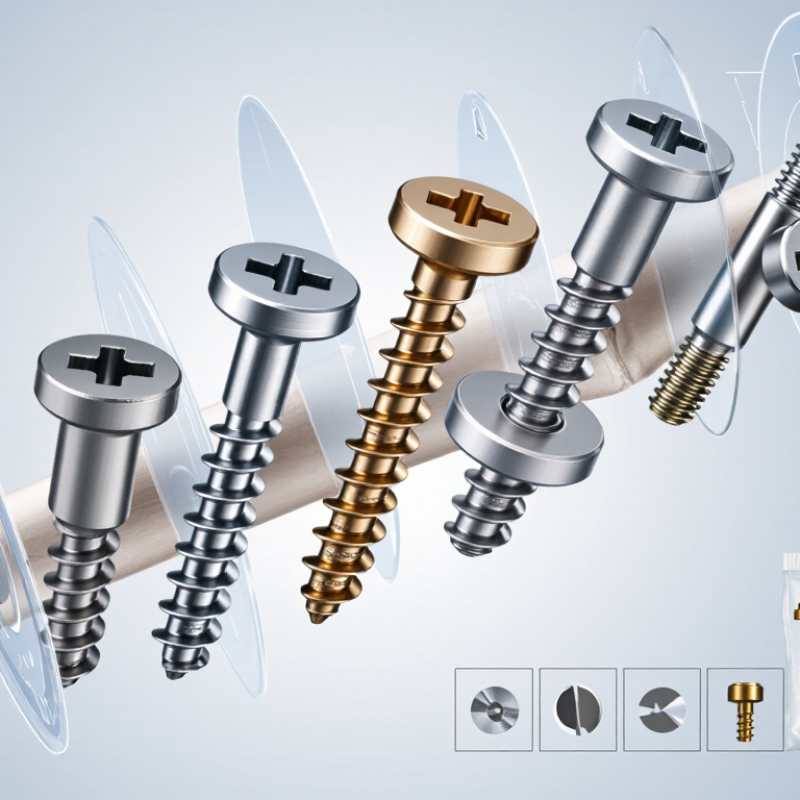
Cortical screws are fixation devices designed to grip dense cortical bone. Cortical bone forms the hard outer shell of many long bones. These screws usually have fine, closely spaced threads along most of their shaft. Their smaller thread pitch increases contact with the bone wall. A relatively thick core can improve bending strength.
The screw head may provide compression, plate fixation, or a locking connection. Common materials include surgical stainless steel and titanium alloys. Selection depends on bone anatomy, implant compatibility, diameter, length, and the surgeon’s fixation plan. A screw that appears suitable on paper may still be wrong for a narrow canal. Small measurement errors matter.
Clinically, cortical screws support fracture fixation, osteotomy stabilization, and selected reconstructive procedures. They may be inserted through a plate or used as independent fixation, depending on the technique. Accurate drilling, tapping when required, and controlled insertion help reduce stripping and thermal injury. The surgeon must confirm trajectory and purchase through imaging and direct assessment. Global buyers should review traceability, material certificates, sterile packaging, instructions for use, and applicable regulatory clearance. Product descriptions alone are not enough. A low price can hide weak documentation, inconsistent tolerances, or poor packaging control.
2026 Best Cortical Screws for Global Buyers?
Global buyers should compare specifications beyond diameter and length. Review the screw’s core diameter, thread profile, pitch, and thread length. These details affect purchase decisions and surgical compatibility. Confirm whether the design is fully or partially threaded. Match the screw with the intended bone anatomy and approved fixation system.
Material matters. Common implant materials include titanium alloys and surgical-grade stainless steel. Buyers should request mechanical testing, corrosion resistance data, and applicable quality certificates. Check the driver interface carefully. A precise recess can reduce insertion damage during controlled procedures. Packaging should show lot numbers, expiry dates, sterilization status, and traceability records. Regulatory documents must fit the destination market, not only the manufacturing country.
Tips: Build a comparison table before requesting quotations. Record diameter, length range, material, thread type, driver size, packaging, and documentation. Ask for evidence, not polished claims. A neat specification sheet can still hide compatibility limits. Review instructions for use with qualified clinical and procurement teams. Small omissions become expensive later. Also examine imaging compatibility and storage conditions. Some buyers focus heavily on price, then discover that instruments or documentation are incomplete. I have found that this comparison is easy to underestimate. Allow room for technical review, because “best” depends on the procedure, system, and local requirements.
Key specifications global buyers should compare in 2026
The chart presents common nominal diameters used across cortical screw systems, from small-fragment applications to large-fragment fixation. Nominal diameter alone does not determine performance. Buyers should also compare thread pitch, core diameter, thread profile, screw length range, head design, self-tapping geometry, driver interface, and available sterile packaging.
Common implant materials include stainless steel conforming to ASTM F138 and titanium alloy conforming to ASTM F136. Confirm material certificates and MRI information.
Verify nominal diameter, core diameter, thread pitch, available lengths, drill size, and compatibility with the intended plate or instrument system.
Request technical files, sterilization validation, biocompatibility evidence, traceability documents, and market-specific regulatory registrations.
Representative nominal diameters commonly encountered in orthopedic cortical screw systems. Actual specifications vary by system and applicable standard; always verify the manufacturer’s technical documentation and instructions for use.
For global buyers in 2026, cortical screw quality begins with material selection. Titanium alloy, especially Ti-6Al-4V, offers strong fatigue resistance and useful imaging compatibility. Stainless steel may suit specific applications, but weight and imaging behavior require careful review. Material certificates should identify composition, heat treatment, and traceability for every production lot.
Tips: Ask for dimensional inspection records, torque testing, fatigue data, and surface-cleanliness results. Review coating thickness, adhesion, and particle controls. Anodized surfaces can improve identification and corrosion resistance, while hydroxyapatite coatings may support bone interaction. However, coating performance depends on preparation, thickness, and clinical design. It should never be judged by appearance alone. Manufacturing should follow a controlled quality system, such as ISO 13485, with validation for machining, cleaning, packaging, and sterilization. Relevant ASTM and ISO tests can support strength, biocompatibility, and corrosion evaluations.
In procurement reviews, I would also check thread geometry under magnification. Small burrs can affect insertion feel and handling. Batch records should connect raw material, operators, equipment, and final inspection. Global buyers must compare technical files with destination-market requirements, not rely on one certificate. No specification is perfect. A supplier may provide excellent test results while offering weak change-control documentation. That gap deserves direct questions, sample review, and independent verification before approval.
| Product Category | Typical Material | Common Surface Finish or Coating | Typical Mechanical Profile | Common Size Range | Key International Material Standards | Manufacturing and Quality Expectations | Best-Fit Purchasing Priorities |
|---|---|---|---|---|---|---|---|
| Standard cortical bone screw | Implant-grade austenitic stainless steel, commonly 316L stainless steel | Passivated, electropolished, or finely polished surface; generally uncoated | High strength and stiffness; suitable for cortical purchase and compression applications | Typical major diameters: 2.0–4.5 mm; lengths commonly 6–80 mm | ASTM F138; ISO 5835 or applicable regional implant-screw requirements | Controlled cold forming or machining, validated cleaning, passivation, dimensional inspection, and lot traceability | Cost efficiency, high dimensional consistency, corrosion resistance, and broad surgical compatibility |
| Titanium alloy cortical screw | Titanium alloy Ti-6Al-4V ELI | Passivated, polished, or micro-textured; optional anodized color identification where permitted | High strength-to-weight ratio, lower elastic modulus than stainless steel, and good corrosion resistance | Typical major diameters: 2.0–5.0 mm; lengths commonly 6–100 mm | ASTM F136; ISO 5832-3; applicable requirements of ISO 14630 | Verified alloy chemistry, oxygen and nitrogen control, validated machining, burr removal, cleaning, and biocompatibility evaluation | Low implant weight, MRI-related considerations, corrosion resistance, and reduced stiffness mismatch |
| Commercially pure titanium screw | Commercially pure titanium, typically Grade 2 or Grade 4 | Machined and passivated; optional blasted or acid-etched surface for specific designs | Excellent corrosion resistance; lower strength than Ti-6Al-4V, with Grade 4 offering higher strength than Grade 2 | Typical major diameters: 2.0–4.5 mm; lengths commonly 6–80 mm | ASTM F67; ISO 5832-2 | Material-grade verification, controlled surface treatment, particle and residue control, and validated cleaning processes | High biocompatibility, simple material declaration, and applications where moderate mechanical loading is expected |
| Cannulated cortical screw | 316L stainless steel or Ti-6Al-4V ELI, depending on the system design | Passivated or polished; internal cannulation must be free of burrs and blocked passages | Guided insertion through a wire; slightly reduced core strength compared with an equivalent solid screw | Typical major diameters: 2.5–6.5 mm; lengths commonly 10–100 mm | ASTM F138 or ASTM F136; ISO 5835 and applicable device-specific requirements | Strict concentricity, cannulation diameter control, thread-form inspection, fatigue testing, and cleaning validation | Accurate minimally invasive placement, guidewire compatibility, and reliable internal-channel cleanliness |
| Locking cortical screw | 316L stainless steel or Ti-6Al-4V ELI, matched to the compatible plate system | Passivated or polished; thread and drive recess require precise surface finishing | Threaded head engages a plate, supporting fixed-angle construct stability; torque performance is design-dependent | Typical major diameters: 2.0–5.0 mm; lengths commonly 6–80 mm | ASTM F138 or ASTM F136; ISO 5835; system-level verification under ISO 14971 principles | Validated thread geometry, head-to-plate fit, insertion-torque testing, drive-recess inspection, and assembly compatibility testing | Interoperability, consistent locking torque, driver compatibility, and verified plate-screw system performance |
| Self-tapping cortical screw | 316L stainless steel, commercially pure titanium, or Ti-6Al-4V ELI | Passivated or polished cutting flute; optional low-friction surface treatment subject to biological validation | Designed to form its own pilot thread; insertion torque and pull-out performance depend on flute geometry and bone density | Typical major diameters: 2.0–4.5 mm; lengths commonly 6–80 mm | ASTM F67, ASTM F136, or ASTM F138, according to the selected material | Cutting-edge geometry control, torque testing, dimensional inspection, burr-free finishing, and simulated-use validation | Reduced instrumentation steps, predictable insertion, sharp but durable cutting flutes, and reliable driver engagement |
| Bioabsorbable cortical screw | Medical-grade polymers such as PLLA, PLGA, or related resorbable polymer systems | Normally uncoated; surface and degradation behavior are controlled through polymer formulation and processing | Lower initial stiffness than metallic screws; strength and mass gradually change during degradation | Typical major diameters: 2.0–6.5 mm; length and geometry are highly design-specific | ISO 10993 for biological evaluation; polymer-specific specifications and applicable regional device requirements | Strict molecular-weight control, residual-monomer testing, degradation-profile validation, sterile-barrier validation, and shelf-life studies | Temporary fixation, reduced long-term metallic burden, and applications where predictable resorption is clinically justified |
| Porous or osteoconductive-surface screw | Usually Ti-6Al-4V ELI or commercially pure titanium | Plasma-sprayed, additive-manufactured, blasted, or chemically treated porous surface; coating adhesion must be validated | Surface architecture may support bone ongrowth or ingrowth; fatigue behavior depends on the substrate and coating design | Typical major diameters: 3.0–6.5 mm; lengths commonly 10–100 mm | ASTM F136 or ASTM F67; coating-related validation may reference ASTM F1854 and ASTM F1978 where applicable | Porosity, roughness, coating thickness, adhesion, particle release, fatigue strength, and cleaning must be controlled | Bone integration objectives, coating durability, particulate control, and long-term mechanical stability |
| Global compliance baseline | Material must be traceable to an implant-grade specification and supported by supplier certificates | Surface treatment must be documented, validated, and compatible with sterilization and clinical use | Performance should be supported by tensile, torsional, fatigue, insertion-torque, and pull-out or equivalent tests as applicable | Dimensions should be expressed in metric units with controlled tolerances and validated gauges | ISO 13485 quality management; ISO 14971 risk management; ISO 10993 biological evaluation; ISO 14630 general implant requirements | Design controls, process validation, inspection records, nonconformance control, packaging validation, and lot-level traceability | Regulatory pathway, technical file availability, sterilization status, shelf life, change-control policy, and export documentation |
Buyer’s note: The values shown are typical industry ranges and selection references, not universal specifications. Final suitability should be confirmed against the intended anatomy, surgical technique, compatible instruments, applicable regulatory jurisdiction, and the manufacturer’s validated technical documentation.
2026 Best Cortical Screws for Global Buyers?
Selecting cortical screws in 2026 requires more than comparing prices or polished catalogs. Buyers should examine supplier experience, certification, and measurable product quality. A capable supplier should explain material grade, thread geometry, dimensional tolerances, and compatibility with surgical instruments. Ask for evidence, not promises.
Certification needs careful review. Request a current quality management certificate, such as ISO 13485, and confirm its scope, expiry date, and issuing organization. Depending on the destination market, regulatory documentation may include technical files, biological evaluation, sterilization validation, or market authorization records. These documents must match the exact screw family and manufacturing site. A certificate with the wrong scope is not useful.
Look closely at manufacturing controls. The supplier should provide batch traceability, inspection records, surface-finish data, packaging validation, and change-control procedures. For metallic implants, material certificates and mechanical testing can reveal inconsistencies that photographs hide. Independent testing may strengthen confidence. Ask how nonconforming products are handled. Good answers include root-cause analysis and corrective action.
Samples matter. Test the screw with the intended driver and plate system under controlled conditions. Check thread sharpness, insertion torque, head fit, and packaging integrity. I have learned that a clean sample does not prove stable production. Audit reports, complaint records, and delivery history may show more. No supplier is perfect. The buyer should keep questioning assumptions, especially when documents look complete but practical details remain vague.
Choosing the best cortical screw in 2026 depends on surgical technique, bone quality, and local market requirements. A trauma surgeon may need a solid screw for strong purchase in dense diaphyseal bone. Another case may require a cannulated design for guidewire placement and accurate alignment. Diameter, length, thread profile, head geometry, and driver compatibility must match the fixation plan.
MarketsandMarkets estimated the orthopedic trauma devices market at approximately US$9 billion in 2024, with continued growth toward 2029. UN DESA also projects 1.6 billion people aged 65 or older by 2050. These figures suggest rising fixation demand, but they do not justify one universal screw design. Buyers should verify fatigue testing, pull-out data, corrosion resistance, sterilization status, packaging integrity, and manufacturing traceability. Material choice matters. Titanium may reduce imaging artifacts, while stainless steel often supports cost-sensitive procurement. Neither option is automatically better.
Tips: Build a comparison sheet before purchasing. Include screw dimensions, instrument availability, regulatory documentation, minimum order quantity, and replacement lead time. Check whether local hospitals can service the system. A low unit price can conceal expensive instruments or delayed delivery. I would not rely on catalog language alone. Ask for test methods, not only performance claims. Small details matter. Also review surgeon feedback after trial cases; early assumptions can be wrong.
Cortical screws grip dense bone near the outer shell of many long bones. Their fine, closely spaced threads increase contact with the bone wall. They are fixation devices.
A smaller thread pitch can improve purchase in dense cortical bone. A relatively thick core may increase bending strength. The head may provide compression, plate fixation, or a locking connection.
They can support fracture fixation and osteotomy stabilization. Selected reconstructive procedures may also use them. A screw may pass through a plate or work independently.
Compare diameter, length, core diameter, thread profile, pitch, and thread length. Confirm whether the screw is fully or partially threaded. Driver size matters too. Small details affect compatibility.
Common materials include surgical stainless steel and titanium alloys. Buyers should request mechanical testing and corrosion resistance data. Material certificates are important. A familiar material does not guarantee suitability.
Match the screw with the bone anatomy and planned fixation system. A narrow canal can make an apparently suitable screw unusable. Small measurement errors matter. The surgeon must confirm the trajectory and bone purchase.
Review traceability records, material certificates, sterile packaging, and instructions for use. Check lot numbers, expiry dates, and sterilization status. Regulatory documents should fit the destination market. Product descriptions alone are not enough.
A low price may hide weak documentation, inconsistent tolerances, or poor packaging control. Instruments may also be incomplete. Build a comparison table before requesting quotations. I would not call one screw “best” without knowing the procedure and local requirements.
Cortical Screws are precision orthopedic fixation devices designed to secure bone fragments and support stable healing, particularly in areas with dense cortical bone. For global buyers in 2026, key specifications to compare include diameter, length range, thread profile, core design, drive interface, self-tapping performance, and compatibility with related fixation systems. These factors should be matched to the intended surgical application, bone condition, and clinical workflow.
Material selection, surface treatment, dimensional accuracy, and manufacturing consistency also play important roles in product performance. Buyers should review options such as implant-grade stainless steel or titanium alloys, along with coatings or finishes intended to support corrosion resistance and handling. Supplier evaluation should include traceable quality systems, documented testing, regulatory certifications, sterilization controls, packaging integrity, and reliable production capacity. A practical selection process should balance clinical requirements, market regulations, budget, delivery capability, and after-sales support to identify safe, consistent, and suitable products for different surgical and regional needs.
