Axiora Medical Axiora Medical

How to Choose Spinal Internal Fixation Systems in 2026?

Time:2026-11-23 Author:Amelia
0%

Choosing Spinal Internal Fixation Systems in 2026 means balancing clinical needs, device design, and dependable evidence. The right choice is not simply the newest implant or the longest feature list. It depends on the patient’s anatomy, diagnosis, bone quality, and planned procedure. A surgeon may compare pedicle screws, rods, plates, connectors, and compatible instruments before deciding which configuration fits the case.

Details matter. Screw dimensions, rod contouring, material properties, and connection methods can affect surgical handling and construct design. Compatibility is equally practical: a system should work with its specified instruments and components, with clear instructions for use. Surgeons and hospital teams should also review clinical data, manufacturing quality, traceability, sterilization information, and applicable regulatory status in their region. Ask for evidence, not just a polished brochure. Small print counts.

A reliable comparison considers the full treatment pathway, from preoperative planning to follow-up imaging. It should include input from experienced spine surgeons, operating-room staff, and procurement specialists, while keeping the patient’s goals and risks in view. No fixation system is best for every patient. That sounds tidy on paper; real cases are messier. Evidence may also be limited for newer designs, so uncertainty deserves an honest place in the decision. This guide outlines practical questions for comparing systems in 2026, without replacing professional judgment or patient-specific clinical assessment.
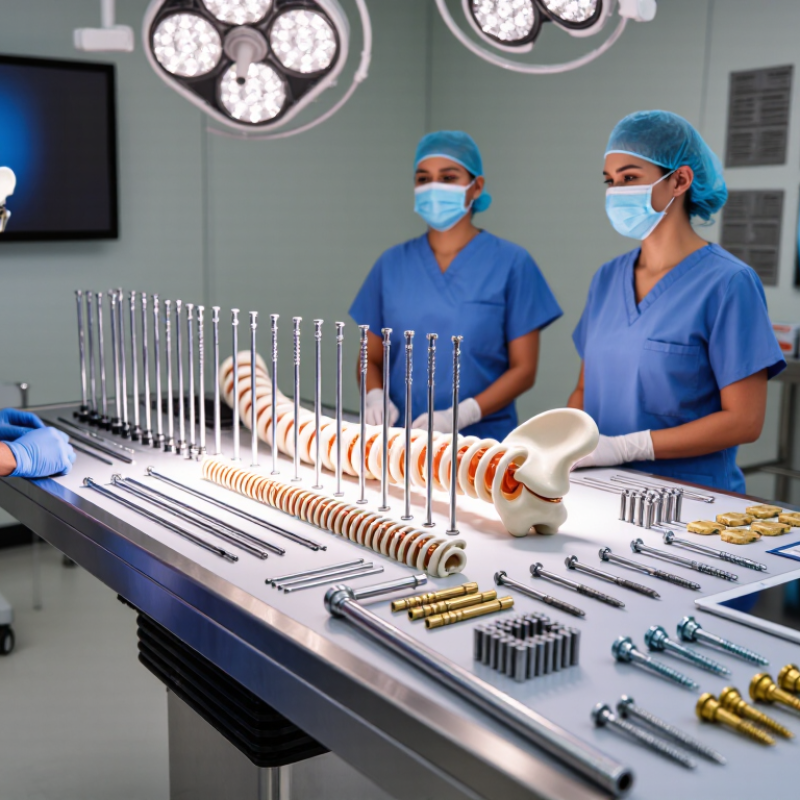
How to Choose Spinal Internal Fixation Systems in 2026?

Define the Indication: Fusion Level, Stability Needs, and Patient Factors

The indication should determine the fixation plan, not the other way around. Identify the unstable or painful segment, then confirm the proposed fusion levels with symptoms, examination, and imaging. A single-level fusion and a multilevel construct face different mechanical demands. Check alignment and bone quality, too. A level count alone is not enough.

Stability needs depend on the diagnosis, the number of levels, and the degree of bone removal. The 2021 Congress of Neurological Surgeons guideline identifies a DEXA T-score below -2.5, CT bone density below 97.9 Hounsfield units, or vitamin D below 20 ng/mL as indicators of greater risk for osteoporosis-related complications after spinal instrumentation. These are risk markers, not automatic decisions. I would not treat a threshold as a verdict.

Patient factors can change the balance. Consider age, bone health, smoking history, prior surgery, activity, and the ability to follow recovery instructions. A construct suitable for robust bone may be less reliable in fragile bone. Discuss realistic goals and complications with the patient. Small details matter. The Global Burden of Disease study estimated 619 million people had low back pain in 2020, underscoring the scale of spinal problems, but population figures cannot select an implant for an individual. Recheck the plan when the clinical picture and scans do not quite agree.

How to Choose Spinal Internal Fixation Systems in 2026?

Define the indication: fusion level, stability needs, and patient factors

How to use this chart: The bars show standard adult vertebral counts by region—an anatomical reference, not a recommended fusion length or implant specification.

Planning considerations: Identify the levels requiring treatment; assess instability, deformity, and the stability needed; then account for bone quality, alignment, comorbidities, age, activity, and prior surgery. The appropriate construct is individualized by the treating spine specialist.

Anatomical reference: standard adult anatomy; the five sacral vertebrae are normally fused.

Compare Pedicle Screws, Rods, Plates, and Cages by Intended Use

How to Choose Spinal Internal Fixation Systems in 2026?

Pedicle screws and rods are commonly paired to stabilize a spinal segment from the back. Screws anchor into vertebrae, while rods connect them and help control movement. A surgeon may consider this arrangement when instability, deformity, or a planned fusion requires support across one or more levels. Bone quality and anatomy matter: a small difference in screw trajectory can affect the available fixation.

Plates serve a different purpose. In some procedures, especially in the neck, they attach to the front of the vertebrae and help hold treated levels steady. Cages are placed between vertebrae after disc removal. They help maintain disc height and provide space for bone growth during fusion. Cage size, shape, and position must suit the patient’s anatomy and surgical approach. Fit is not a minor detail.

These devices are not interchangeable, and more hardware does not automatically mean better support. The choice depends on the condition being treated, spinal level, alignment goals, bone strength, and the surgeon’s assessment. The comparison is not perfectly tidy; procedures sometimes combine components. Even a well-positioned implant cannot guarantee fusion or prevent every complication, so expected benefits and risks should be discussed with a qualified spine specialist.

Compare Construct Strength Using ASTM F1717 and F2077 Test Data

Choosing a spinal internal fixation system in 2026 means looking beyond a single strength number. ASTM F1717 evaluates spinal implant constructs in a vertebrectomy model, using a fixture that represents a gap between vertebrae. ASTM F2077 tests intervertebral body fusion devices under specified loading modes, including compression, compression-shear, and torsion. The standards examine different components and setups, so their results are not interchangeable.

Compare results within the same test method and loading mode. Check the tested configuration: screw placement, rod dimensions, device size, and fixture details can all affect reported strength. Look for static failure loads and, where available, fatigue results such as cycles to failure. Small details matter. A higher value in one test does not automatically mean better performance in a patient. Laboratory fixtures simplify real anatomy, and clinical loading varies with bone quality, surgical technique, and healing. Ask whether the report identifies sample numbers, test conditions, and failure locations. If key details are missing, the comparison is only partial. That is useful to admit. Test data can guide discussion with a qualified spine specialist, but it cannot predict an individual outcome or replace clinical judgment.

How to Choose Spinal Internal Fixation Systems in 2026? — Compare Construct Strength Using ASTM F1717 and F2077 Test Data
Comparison dimension ASTM F1717 — spinal implant constructs ASTM F2077 — intervertebral body fusion devices How to use the data when choosing a system
What is tested? Spinal implant assemblies in a vertebrectomy model. The test evaluates the mechanical behavior of the configured construct. Intervertebral body fusion devices tested as devices, using the configurations specified by the test method. Use F1717 results to compare tested fixation constructs; use F2077 results to compare tested interbody devices. They answer different questions and are not interchangeable.
Primary test modes Includes static and fatigue testing of spinal implant assemblies, with loading modes specified by the applicable standard and test configuration. Includes compression, compression-shear, and torsion test methods, with static and dynamic testing as specified by the standard. Compare results only within the same test mode and under matching or clearly documented test conditions.
Specimen and configuration Results depend on the implant assembly, component arrangement, test blocks, and setup used. Record the complete construct configuration. Results depend on device design, dimensions, test setup, and loading configuration. Record the tested device size and configuration. Check that the tested configuration represents the intended use. A result for one assembly or device size does not automatically apply to another.
Static strength data to review Review the reported load or moment at failure, stiffness, failure location, and the corresponding loading mode. Review the reported failure load or torque, stiffness where reported, failure mode, and the corresponding loading mode. Compare the same reported metric in the same units. Higher values alone do not establish clinical superiority or suitability.
Fatigue data to review Review the applied loading, load levels, cycle count, runout or failure outcome, and failure location for the tested construct. Review the applied loading, load levels, cycle count, runout or failure outcome, and failure mode for the tested device. Do not compare cycle counts without checking the loading mode, load level, protocol, and runout criteria.
Units and reporting Common reported quantities include force (N), moment or torque (N·m or N·mm), stiffness, and cycles. Common reported quantities include force (N), torque (N·m or N·mm), stiffness, and cycles. Confirm units, test conditions, standard edition, sample count, and whether values are means, ranges, or individual results before comparing data.
Acceptance criteria The result describes mechanical performance under the stated laboratory test conditions; it is not, by itself, a universal clinical pass/fail threshold. The result describes mechanical performance under the stated laboratory test conditions; it is not, by itself, a universal clinical pass/fail threshold. Use predefined engineering and regulatory acceptance criteria appropriate to the intended application; do not infer a universal minimum from the test result alone.
Key limitation A standardized vertebrectomy model does not reproduce every anatomical, biological, or in vivo condition. Device-level testing does not, on its own, establish the performance of a complete instrumented spinal construct or clinical outcome. Interpret mechanical test data alongside intended use, device compatibility, clinical evidence, and the full test report.
Practical comparison record Record: standard edition; construct components and configuration; test mode; specimen count; loading conditions; failure load or moment; stiffness; fatigue outcome; failure location. Record: standard edition; device type and size; test mode; specimen count; loading conditions; failure load or torque; stiffness; fatigue outcome; failure mode. Use a like-for-like comparison table and flag any differences in configuration or protocol rather than treating unlike results as directly comparable.

Data note: ASTM standards define test methods, not universal strength values for every fixation system. Actual numerical results are specific to the tested device or construct and its documented test conditions; consult the applicable test report.

Review Biocompatibility Evidence Against ISO 10993 Standards

How to Choose Spinal Internal Fixation Systems in 2026?

Review Biocompatibility Evidence Against ISO 10993 Standards

Choosing spinal internal fixation in 2026 requires more than comparing alloy names or implant geometry. Review the biological evidence behind each finished device. ISO 10993 is a framework for evaluating biological risks, not a single “safe” certificate. Short version.

A useful dossier identifies patient-contacting materials, contact duration, surface treatments, coatings, and manufacturing residues. It should explain which ISO 10993 endpoints were assessed and why others were not needed. For a long-term implant, reviewers may expect evidence addressing local tissue response, systemic toxicity, sensitization, and chemical characterization, as appropriate to the risk assessment. Test results should reflect the final processed product, not only a raw material coupon. That detail matters.

Ask how cleaning, sterilization, and any coating changes affect the evidence. Check that reports identify sample preparation, methods, acceptance criteria, and deviations. A “passed” statement without context is weak evidence. So is an older test without a documented rationale for applying it to the current design. The paperwork can look complete and still leave questions.

Surgeons and procurement teams should compare evidence with intended use, surgical handling, and follow-up needs. If a supplier cannot explain an endpoint in plain language, request clarification. No dossier removes all uncertainty; transparent limits and a clear risk rationale are more trustworthy than polished promises.

Assess Fusion, Complication, and Reoperation Data; Verify FDA 510(k) or PMA Status

How to Choose Spinal Internal Fixation Systems in 2026?

Choosing a spinal internal fixation system should start with evidence for the intended procedure, not a polished brochure. Compare fusion rates at consistent follow-up points, such as one and two years, and check how fusion was confirmed. Look for patient numbers, missing follow-up, and clear definitions. Small studies can look persuasive.

Review complications and reoperations alongside fusion, including infection, screw loosening, hardware breakage, and adjacent-level procedures. Ask whether rates include all treated patients or only those with complete records. Differences in patient risk and surgical technique make comparisons imperfect.

That caveat matters.

A low reoperation rate may reflect short follow-up or selective reporting, rather than fewer long-term problems.

Verify the exact device and intended use in the FDA’s public records. For a 510(k) device, confirm clearance and the relevant indication. Clearance generally rests on substantial equivalence, not proof of superiority. For a PMA device, check approval status, labeling, and safety updates. Neither pathway alone proves better outcomes than another system.

Read the evidence, not just the status.

Document uncertainties, too; real-world records can be messy, and one clean table is not the final answer.

FAQS

How should the planned fusion levels be chosen?

Start with the painful or unstable segment. Compare symptoms, examination findings, and imaging. A level count alone is not enough.

Which bone-health measurements may indicate higher risk?

Risk markers include a DEXA T-score below -2.5, CT bone density below 97.9 Hounsfield units, or vitamin D below 20 ng/mL. Not a verdict.

Which patient factors can affect fixation planning?

Consider age, bone health, smoking history, prior surgery, activity, and ability to follow recovery instructions. I’d pause here: a neat threshold can hide a complex patient.

What do pedicle screws and rods do?

Screws anchor into vertebrae, and rods connect them to help control movement. Bone quality and screw trajectory matter.

How do plates and cages differ?

Plates may steady treated levels from the front, especially in the neck. Cages sit between vertebrae, helping maintain disc height and space for bone growth. Fit matters.

Are these devices interchangeable, or does more hardware mean better support?

No. The choice depends on diagnosis, spinal level, alignment, bone strength, and surgical assessment. Procedures may combine components.

What should a biological safety dossier explain?

It should identify patient-contacting materials, contact duration, coatings, surface treatments, and manufacturing residues. It should explain assessed endpoints and any exclusions.

What details matter when reviewing test reports?

Check sample preparation, methods, acceptance criteria, and deviations. Ask how cleaning or sterilization affects the evidence. A “passed” statement alone leaves questions.

Conclusion

Choosing Spinal Internal Fixation Systems in 2026 starts with matching the device to the clinical indication. Consider the fusion level, the stability required, and patient-specific factors such as anatomy and bone quality. Pedicle screws, rods, plates, and cages serve different purposes, so compare each component according to its intended role rather than treating systems as interchangeable.

Evaluate evidence as well as design. ASTM F1717 and F2077 test data can help compare construct or cage performance under specified laboratory conditions, while ISO 10993 documentation addresses relevant biocompatibility considerations. Review available fusion, complication, and reoperation data in context, noting the populations and follow-up periods reported. Finally, verify the applicable FDA 510(k) clearance or PMA status and confirm that the device’s authorized use aligns with the intended application. A careful, evidence-based comparison supports informed selection without relying on a single test or outcome measure.

Amelia

Amelia

Amelia is a seasoned marketing professional with a wealth of expertise in our company’s core offerings. With an unwavering passion for driving growth and innovation, she plays a pivotal role in shaping our marketing strategies and enhancing brand visibility. A key aspect of her responsibilities......