Axiora Medical Axiora Medical

How to Choose Self Tapping Bone Screws?

Time:2026-10-16 Author:Charlotte
0%

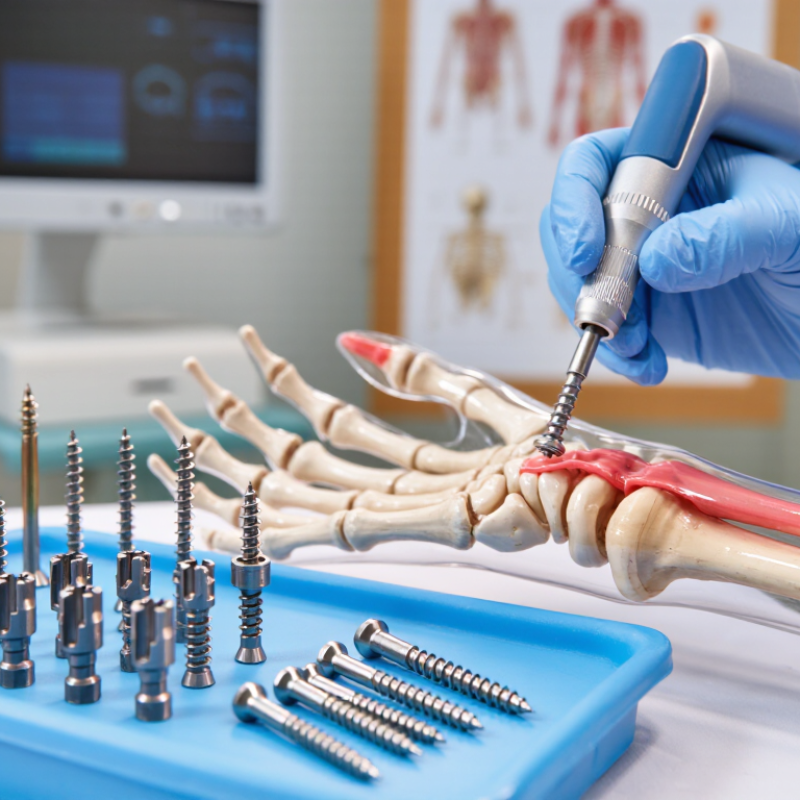
How to Choose Self Tapping Bone Screws? The answer begins with the patient, not the product label. Bone quality, fracture pattern, anatomical location, and fixation purpose should guide every decision. A screw used in dense cortical bone may perform differently from one placed in softer cancellous bone. Thread design, diameter, length, pitch, tip geometry, and material all influence stability. Small differences matter.

Orthopedic trauma expert Dr. Paul Tornetta III offers a practical reminder: “A screw works only when its design matches the bone, the fracture, and the fixation goal.” This principle keeps selection focused. Self Tapping Bone Screws can reduce the need for separate tapping in suitable situations. However, they do not remove the need for accurate drilling, controlled insertion, and careful depth measurement. The surgeon must still protect nearby nerves, vessels, joints, and soft tissue.

Clinical experience also exposes an easy mistake. A screw that feels tight is not automatically stable. Excessive torque can damage bone threads, especially in osteoporotic tissue. Poor alignment can create unwanted compression or leave the fracture insufficiently supported. Imaging, tactile feedback, and the manufacturer’s technical guidance should work together. Not every fracture benefits from the same screw profile.

This guide examines how to compare screw specifications, select the appropriate size, and recognize common errors. It also considers when a self-tapping design may be unsuitable. The process is not perfectly predictable. Patient anatomy varies, and surgical judgment remains essential. Reliable choices come from combining evidence, training, and careful intraoperative assessment.
How to Choose Self Tapping Bone Screws?

Understanding the Design and Function of Self-Tapping Bone Screws

How to Choose Self-Tapping Bone Screws?

Understanding design and function begins with the cutting flute. A self-tapping screw creates its thread while entering prepared bone. Its tip must cut cleanly, not crush the surrounding cortex. Thread pitch, core diameter, and flute length control this behavior. A larger core can improve bending strength. However, it may remove more bone during insertion.

Material choice also matters. Titanium alloys are lightweight and generally compatible with imaging. Stainless steel offers high strength and predictable mechanical performance. The correct option depends on anatomy, loading, and imaging requirements. ASTM F543 evaluates orthopaedic screws through insertion torque, removal torque, torsional strength, and pullout testing. These tests offer useful comparisons, but laboratory results cannot fully reproduce living bone.

Bone density changes the decision. A 2023 International Osteoporosis Foundation report estimated that osteoporosis affects about 200 million women worldwide. Poor-quality bone may need a wider thread profile or longer purchase. Yet longer is not automatically safer. Excessive length can approach nerves, vessels, or joint surfaces. Surgical planning should therefore combine imaging, measured depth, and the screw’s thread design.

Clinical evidence remains imperfect. A 2022 systematic review in the Journal of Orthopaedic Surgery and Research reported inconsistent fixation outcomes across different bone qualities and screw designs. That matters. Selection should consider insertion torque, pilot-hole accuracy, and resistance to loosening. A screw that feels secure can still damage fragile bone. My own choice would remain provisional until imaging, bone quality, and the intended load are reviewed by a qualified orthopaedic professional.

How to Choose Self-Tapping Bone Screws?

Understanding the Design and Function of Self-Tapping Bone Screws

The chart compares representative nominal diameters commonly used in orthopedic bone screw families. Smaller cortical screws are often selected for limited bone thickness and smaller fragments, while larger cancellous screws may be used when greater purchase or deeper fixation is required. Final selection should also consider bone quality, anatomy, thread design, screw length, tapping geometry, insertion torque, material, and the device manufacturer’s instructions for use.

Values represent common nominal screw sizes in millimeters, not a universal sizing recommendation. Self-tapping performance depends on the cutting flute, thread profile, tip geometry, and bone density.

Identifying the Surgical Requirements and Bone Conditions

How to Choose Self Tapping Bone Screws?

Choosing a self-tapping bone screw starts with the surgical task, not the screw catalog. Fixation for a simple cortical fracture differs from metaphyseal support or small-fragment reconstruction. The surgeon should assess load, fragment size, compression needs, incision access, and expected healing time. The Lancet reported about 178 million new fractures worldwide in 2019, showing how varied these clinical demands can be.

Bone quality changes the decision sharply. Dense cortical bone may tolerate aggressive threads and controlled insertion torque. Osteoporotic or thin cortical bone needs better purchase, careful drilling, and reduced torque. The International Osteoporosis Foundation reports more than 8.9 million osteoporosis-related fractures annually worldwide. That figure deserves attention, but it cannot replace patient-specific imaging. A screw that performs well in a young adult may strip fragile bone. Self-tapping is not always self-drilling. That distinction is easy to overlook.

Tips: Match screw length to measured depth, while avoiding joint penetration. Check thread engagement across the intended cortex. Use imaging to identify sclerosis, cavities, or comminution before insertion. Follow the system’s torque and pilot-hole guidance. In practice, tactile feedback can be useful, but it is imperfect and should never override imaging or surgical judgment. Reassess the plan when bone density, fracture geometry, or reduction quality changes.

Selecting the Screw Size, Thread Type, and Material

Choosing self tapping bone screws requires more than matching a diameter to a radiograph. Screw size should reflect bone thickness, fracture geometry, and the load expected after fixation.

A screw that is too long may irritate soft tissue or damage nearby structures. One that is too short may provide weak purchase. Measure carefully.

Confirm the planned trajectory with imaging and intraoperative assessment.

Thread type matters because bone quality varies. Coarse threads generally suit softer, cancellous bone and can improve purchase. Finer threads may perform better in denser cortical bone, where controlled engagement is important.

Thread length should match the intended fixation zone, not simply the full screw length. Self tapping tips can reduce extra drilling steps, but they do not remove the need for proper alignment and preparation.

Small errors matter.

Material selection also deserves attention. Titanium alloys are lightweight and often compatible with imaging requirements, while stainless steel provides high strength and familiar handling characteristics.

The choice should match the complete fixation system, bone condition, and documented clinical evidence. Never mix components without verified compatibility.

Follow the manufacturer’s validated technique and the operating surgeon’s judgment. A simple rule can mislead.

Patient anatomy, healing risk, and surgical access may change the best option.

Even experienced teams should review torque control, insertion depth, and final imaging before closure.

Comparing Drive Features, Tapping Performance, and Stability

How to Choose Self Tapping Bone Screws?

Choosing a self-tapping bone screw begins with the drive feature. A stable recess transfers torque more evenly and reduces slipping during insertion. Hexagonal and star-shaped drives can provide firm engagement under controlled surgical handling. The recess should match the driver precisely. Even slight mismatch may damage the head or interrupt placement.

Tapping performance depends on the cutting flute, thread profile, and bone condition. Sharp flutes can help the screw advance through dense cortical bone, while wider flutes may clear debris more effectively. In softer cancellous bone, aggressive cutting can reduce purchase instead of improving it. A pilot hole may still be appropriate in dense areas. “Self-tapping” does not mean preparation is never needed.

Stability comes from more than thread depth. Thread engagement, screw diameter, insertion angle, and local bone quality all affect fixation. A screw that feels tight may still have poor holding strength. That detail is easy to miss. In practice, tactile feedback should support imaging, sizing data, and the surgical plan rather than replace them. I have found that rushed insertion often creates avoidable problems, although this observation is not a substitute for validated testing. Engineers and clinicians should review pullout data, fatigue performance, and sterilization requirements before selecting a design. Small differences in thread spacing can matter, particularly when load changes repeatedly.

Checking Compatibility, Safety Standards, and Surgical Handling

How to Choose Self Tapping Bone Screws?

Choosing self tapping bone screws begins with compatibility. Match the screw diameter, length, thread design, and drive recess to the bone, fixation system, and available instruments. The screw material must also suit the implant environment and imaging requirements. Mixing components from different systems can create poor fit, unexpected torque, or reduced stability. Confirm technical documentation, material specifications, and intended anatomical use before surgery.

Safety depends on more than a sterile package. Check applicable regulatory requirements, biocompatibility evidence, sterilization validation, and batch traceability. Inspect the package and screw for damage, corrosion, or deformed threads. A practical checklist should include patient anatomy, bone quality, screw trajectory, and the manufacturer’s instructions for use. No checklist is flawless. That is worth remembering.

Surgical handling affects final performance. Prepare the pilot path only as instructed, then advance the screw with controlled pressure and the correct driver. Excessive force may strip bone or damage the recess. Keep the field clear of metal fragments and avoid using instruments with worn tips. Confirm seating with direct visualization and suitable imaging when required. Do not improvise with mismatched tools. That shortcut can become the complication. Careful handling is slower, but it protects both fixation accuracy and surrounding tissue.

How to Choose Self Tapping Bone Screws? - Checking Compatibility, Safety Standards, and Surgical Handling

Selection Dimension What to Verify Relevant Technical Information Why It Matters Surgical Handling Reminder
Bone and Anatomical Site Identify whether the screw will be placed in cortical bone, cancellous bone, or a mixed-density region. Cortical and cancellous screws use different thread geometries and are not automatically interchangeable. Thread design affects purchase, insertion resistance, and fixation performance. Confirm the intended anatomical application in the device instructions for use and surgical plan.
Screw Diameter and Length Check the outer diameter, core diameter, available lengths, and required depth of fixation. Length should provide adequate purchase without penetrating unintended soft tissue, a joint, or a neurovascular structure. Incorrect dimensions can reduce fixation or increase the risk of anatomical injury. Use imaging and the approved surgical technique to confirm final position and depth.
Self-Tapping Tip and Flutes Confirm that the tip geometry is designed for the intended bone and that the cutting flutes are undamaged. Self-tapping flutes can create threads during insertion, but they do not eliminate the need for a pilot hole when specified. A damaged or unsuitable tip may increase insertion torque, thermal load, or thread damage. Do not force a screw through dense bone; follow the recommended drilling and tapping sequence.
Pilot Hole and Tapping Requirements Verify the recommended drill diameter, drill depth, guide, and whether separate tapping is required. Pilot-hole dimensions are system-specific and depend on screw diameter, thread design, bone quality, and surgical technique. An undersized hole can increase insertion torque; an oversized hole can reduce holding strength. Use calibrated instruments and avoid substituting drill sizes without documented compatibility.
Material and Surface Check the implant material, coating, surface treatment, and compatibility with other implanted components. Common implant materials include titanium alloys and stainless steels; dissimilar-metal combinations require compatibility assessment. Material selection influences strength, corrosion behavior, imaging considerations, and biological response. Do not mix components unless the approved system documentation permits the combination.
Drive Interface Match the driver type and size to the screw recess; inspect the interface for wear or deformation. A fully engaged, correctly sized driver helps reduce cam-out and recess damage. Poor engagement can make insertion, final tightening, or later removal difficult. Keep the driver aligned with the screw axis and apply only the torque specified for the system.
Mechanical and Clinical Standards Review applicable regulatory clearance, technical files, and recognized standards for metallic bone screws. ASTM F543 covers specifications and test methods for metallic medical bone screws; ISO 5835 addresses certain metal bone screws with hexagonal drive connections. Standards help define dimensional, mechanical, and test-method expectations but do not replace clinical judgment. Confirm that the selected configuration is approved for the intended procedure and jurisdiction.
Biological Safety Check material composition, biological evaluation information, and any patient-specific contraindications. ISO 10993 provides a framework for evaluating the biological safety of medical-device materials according to the type and duration of contact. Biological assessment supports evaluation of risks such as irritation, sensitization, or other tissue responses. Review known allergies, sensitivities, and patient factors before implantation.
Sterility and Packaging Inspect the sterile barrier, package integrity, labeling, lot information, and expiration date. A compromised package or expired sterile product should not be used unless it is reprocessed under an approved and validated procedure. Maintaining sterility is essential for reducing contamination and surgical-site infection risks. Open the package using aseptic technique and keep the implant off nonsterile surfaces.
Instrument Compatibility Verify compatibility among the screw, driver, drill, guide, depth gauge, and any plate or fixation component. Instrument dimensions and connection geometry should correspond to the selected implant system. Mismatched instruments may cause inaccurate placement, recess damage, or incomplete insertion. Inspect instruments for wear, deformation, cleanliness, and proper function before use.
Insertion Technique Follow the specified drilling, irrigation, alignment, and insertion sequence. Controlled insertion helps limit excessive torque and heat, particularly in dense cortical bone. Excessive force may damage the screw, bone, driver, or surrounding tissue. Stop and reassess if resistance is unexpectedly high, alignment is lost, or the screw does not advance normally.
Final Verification and Documentation Confirm implant position, fixation, screw count, size, lot details, and postoperative imaging requirements. Documentation should identify the implanted configuration and any intraoperative deviation from the planned technique. Accurate records support follow-up care, traceability, and future revision planning. Use the approved surgical checklist and record any unused or discarded implants according to facility policy.

Important: Selection and implantation must be performed by qualified healthcare professionals using the applicable instructions for use, validated instruments, regulatory requirements, and patient-specific clinical judgment.

FAQS

What should guide the choice of a self-tapping bone screw?

Start with the surgical task, not a catalog. Consider fracture type, load, fragment size, compression needs, access, and healing expectations. Patient-specific imaging remains essential.

How does bone quality affect screw selection?

Dense cortical bone may tolerate controlled insertion torque and finer threads. Soft or osteoporotic bone may need stronger purchase and gentler handling. Fragile bone strips easily.

Is a self-tapping screw always self-drilling?

No. Self-tapping does not always mean self-drilling. Check whether pilot drilling is required. This distinction is easy to miss.

How should the correct screw length be determined?

Measure the available bone depth carefully. Avoid joint penetration and irritation of nearby soft tissue. Confirm thread engagement across the intended cortex.

Which thread type suits different bone conditions?

Coarse threads often improve purchase in softer cancellous bone. Finer threads may suit denser cortical bone. Thread length should match the fixation zone, not merely screw length.

What materials may be considered for bone screws?

Titanium alloys are lightweight and often suitable for imaging needs. Stainless steel provides high strength and familiar handling. The complete fixation system must remain compatible.

How can compatibility and safety be checked before surgery?

Confirm diameter, length, thread design, drive recess, material, and intended anatomical use. Inspect packaging, threads, and surfaces for damage or corrosion. Review sterilization, traceability, and applicable safety documentation.

What handling practices help prevent fixation problems?

Use the specified pilot path, correct driver, and controlled pressure. Excessive force may strip bone or damage the drive recess. Avoid worn instruments and mismatched tools. No checklist catches everything.

Conclusion

Choosing Self Tapping Bone Screws requires a clear understanding of their design, function, and intended surgical use. These screws create their own pilot path as they are inserted, which can simplify fixation and reduce the need for separate tapping in suitable bone conditions. However, selection should begin with the surgical objective, the location of fixation, bone density, and the expected mechanical load. The screw’s diameter, length, thread pattern, pitch, and material should be matched carefully to the anatomy and stability requirements.

Additional factors include the drive design, insertion control, tapping performance, and resistance to loosening or migration. The screw should also be compatible with the instruments and implants used during the procedure. Before use, medical professionals should verify applicable safety standards, product specifications, sterilization requirements, and handling instructions. Careful planning and appropriate technique help support reliable fixation while reducing the risk of damage to surrounding tissue or bone.

Charlotte

Charlotte

Charlotte is a seasoned marketing professional with a deep understanding of the company's portfolio and a passion for elevating its presence in the market. With a keen eye for detail and a commitment to excellence, she ensures that our professional blog is regularly updated with insightful articles......