Axiora Medical Axiora Medical

Top Compression Screws Manufacturers and Suppliers?

Time:2026-09-16 Author:Oliver
0%

Choosing reliable Compression Screws manufacturers and suppliers requires more than comparing prices or browsing product catalogs. These components can support structural joints, machinery assemblies, fixtures, and specialized equipment where controlled clamping matters. A dependable supplier should provide clear drawings, thread specifications, material grades, surface treatments, and documented tolerances. Details matter.

This guide examines manufacturers through practical purchasing criteria. These include production experience, inspection equipment, quality systems, customization capability, lead times, and after-sales support. Buyers should ask how suppliers verify tensile strength, thread accuracy, surface hardness, and corrosion resistance. Certificates such as ISO 9001 registration can support confidence, but they should not replace independent verification. That is not enough.

Experienced manufacturers often explain whether a screw suits repeated loading, vibration, temperature changes, or humid environments. They may also recommend stainless steel, alloy steel, or coated finishes based on operating conditions. However, product descriptions can overlook installation tools, torque requirements, or compatibility with mating materials. Buyers must check those points carefully.

No list is perfect. Supplier performance may change with location, order size, and production schedule. A company with excellent prototypes may struggle with large-volume consistency. Another may offer competitive pricing but limited engineering assistance. This overview therefore focuses on evidence, not impressive claims. It encourages readers to compare samples, inspection reports, communication quality, and delivery records before selecting a long-term partner. The goal is a safer, more informed sourcing decision.
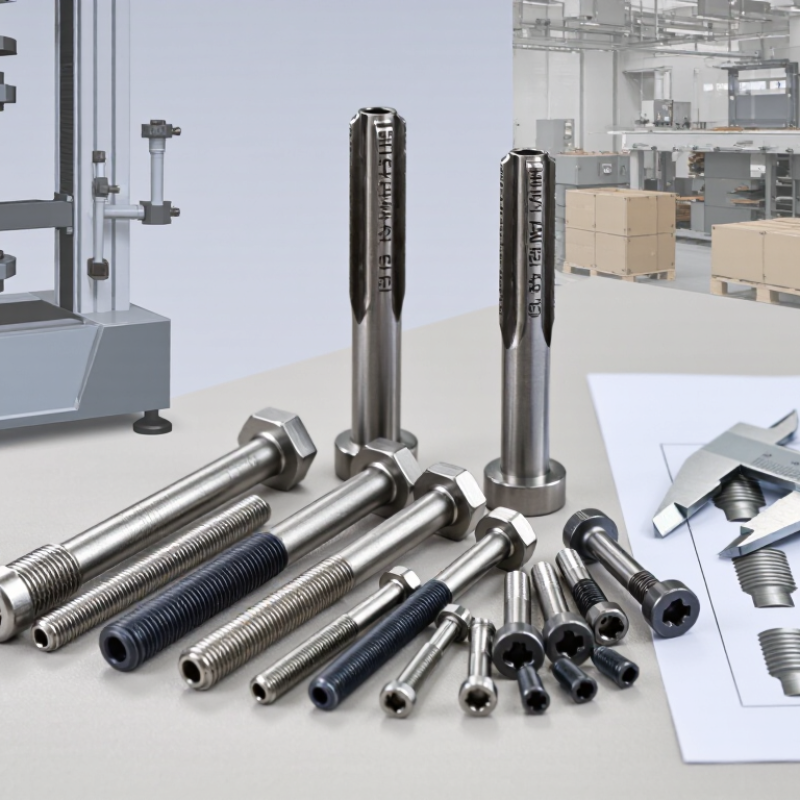
Top Compression Screws Manufacturers and Suppliers?

What Are Compression Screws and How Do They Work?

Compression screws are orthopedic fixation devices that bring two bone fragments together. They are commonly used when controlled compression supports fracture healing. Their design usually includes threads, a shaft, and a head that contacts the near fragment.

The working principle is simple, but placement requires precision. A surgeon may create a gliding hole through the near fragment. The screw threads then grip the far fragment while the head presses against the near cortex. As the screw advances, the fragments move toward each other. The result is interfragmentary compression.

Not magic.

A screw does not correct poor alignment or replace stable surgical technique. Bone quality, fracture shape, screw angle, and tightening force all affect the outcome. Excessive tightening can damage bone, while insufficient purchase may allow movement. This is where practical experience matters.

When evaluating manufacturers and suppliers, medical teams should examine material specifications, dimensional accuracy, surface finish, sterile packaging, and traceability records. Reliable suppliers should provide test documentation and clear lot information. The screw must also match the intended system and surgical method. Small differences in thread pitch or diameter can matter greatly.

The term “compression screw” can be misleading. Some designs create compression directly, while others need a prepared gliding hole or a compatible plate. That distinction deserves careful review before selection. Surgeons and purchasing teams should confirm instructions, regulatory documentation, and quality controls with qualified technical representatives. Even a well-made screw cannot compensate for incorrect planning.

Top Compression Screws Manufacturers and Suppliers? - What Are Compression Screws and How Do They Work?

Compression screws are designed to draw two bone fragments together and maintain interfragmentary compression. The chart shows representative nominal diameters commonly used for different orthopedic fixation applications. Actual sizes vary according to anatomy, fracture pattern, surgical technique, and the supplier’s system.

Which Industries Use Compression Screws?

Compression screws are used across industries that need controlled clamping, repeatable assembly, and quick maintenance. In industrial machinery, they secure covers, panels, guards, and inspection doors. Technicians can remove these parts without damaging threads or replacing separate nuts. Manufacturing equipment often faces vibration, dust, and repeated adjustment. A properly selected compression screw helps maintain pressure when surfaces are not perfectly aligned.

They are also common in woodworking, furniture production, electrical cabinets, and appliance manufacturing. Cabinet makers use them to hold panels firmly while allowing later access. Electrical enclosures may require stainless steel or coated screws for humid environments. In automotive and agricultural equipment, compression screws support removable shields and service panels. Small details matter. Thread length, spring travel, head style, and torque all affect performance.

I have seen loose panels caused by incorrect spring compression rather than poor screw quality. That mistake is easy to miss. Over-tightening can distort thin sheet metal. Under-tightening may allow rattling during operation. Engineers should test fasteners under real vibration, temperature, and cleaning conditions. Material compatibility also deserves attention, especially where aluminum, steel, and moisture meet. Supplier documentation should provide dimensions, load data, corrosion information, and inspection guidance. A practical trial assembly often reveals problems that drawings cannot show. Specifications still need review.

How to Compare Compression Screw Manufacturers

When comparing compression screw manufacturers, start with the application, not the catalog price. A fracture fixation screw may require precise thread geometry, controlled head dimensions, and dependable compression. Ask whether the supplier uses certified titanium or stainless steel. Request material certificates for each lot. Small dimensional differences can affect insertion torque and fit. That matters in the operating room.

Examine the manufacturer’s quality system as closely as the product. Look for documented inspection plans, batch traceability, sterilization controls, and testing for fatigue, torsion, and pullout strength. A supplier should explain its measurement methods, acceptance limits, and handling of nonconforming parts. Request sample inspection reports, not only polished brochures. Also compare tooling capability, minimum order quantities, lead times, and engineering support. A fast quotation means little if revisions take six weeks.

Experience appears in practical details. Can the team advise on cannulation, thread transitions, coating choices, or driver compatibility? Does it answer technical questions with drawings and data? Verify relevant certifications and market-specific documentation before making compliance claims. Price still matters, but a lower unit cost may hide extra inspection, packaging, or validation work. A weighted scorecard helps, although its categories are imperfect and need review after pilot orders. Ask for a controlled sample run. Compare dimensions, surface finish, packaging, and delivery performance.

What to Look for in a Reliable Compression Screw Supplier

Top Compression Screws Manufacturers and Suppliers?

What to Look for in a Reliable Compression Screw Supplier

A reliable compression screw supplier should provide more than attractive catalog images. Ask for material certificates, dimensional reports, and clear lot traceability. These documents show whether each screw can be linked to a defined production batch. Details matter.

Manufacturing experience is equally important. Look for controlled processes, trained inspection staff, and documented quality procedures. For medical applications, a supplier should explain its quality system and provide regulatory documentation for the target market. Do not accept vague claims. Ask for evidence.

Product consistency should be checked through samples, drawings, and test data. Examine thread accuracy, head shape, surface finish, and packaging condition. A small dimensional difference can affect insertion or compression performance. Suppliers should also explain how they manage nonconforming parts and customer complaints.

Communication reveals practical reliability. Can the supplier answer technical questions without changing the subject? Can it confirm lead times, minimum quantities, and custom requirements in writing? Fast replies are useful, but they do not prove quality. That assumption is easy to make.

Request a sample before approving a large order. Review the inspection report against the actual parts, not just a sales promise. A capable supplier will discuss limitations openly, including tolerances it cannot consistently hold. That honesty may feel inconvenient, yet it often prevents costly revisions. Supplier evaluation is never perfectly objective. Keep records of every question, document, and sample result.

How to Choose the Right Compression Screw for Your Application

Choosing the right compression screw begins with the load, not the catalog. Define the clamping force, travel distance, and available installation space. A screw that looks suitable may bottom out before reaching the required compression. Measure twice.

Thread size affects both strength and adjustment control. Fine threads offer more precise movement, while coarse threads resist cross-threading during faster assembly. Check the compressed material, too. Soft rubber may need a broad washer or captive pad to prevent surface damage. Harder assemblies may require a hardened screw and stronger contact surface.

Material selection should match the working environment. Stainless steel can suit humid equipment, while alloy steel may provide higher strength in dry, demanding assemblies. Review temperature, vibration, corrosion exposure, and repeated-cycle requirements with the supplier’s technical team. Ask for dimensional tolerances, material certificates, load data, and inspection records. Reliable manufacturers should explain how testing was performed, not only provide attractive numbers.

Installation details often decide real performance. Keep the screw aligned with the load path, and avoid side loading. Use a calibrated torque tool when torque controls compression. For repeated maintenance, consider a captive design or clear position indicator. Prototype testing is still necessary. A calculation can miss friction, uneven surfaces, or material creep. That weakness is easy to overlook. Run several assembly cycles, record compression changes, and inspect the contact area afterward. Suppliers with practical engineering experience should welcome these questions and help adjust the design.

Top Compression Screws Manufacturers and Suppliers? – How to Choose the Right Compression Screw for Your Application Technical selection guide for comparing screw configurations, materials, standards, dimensions, and sourcing requirements
Compression Screw Type Typical Thread Configuration Common Metric Sizes Typical Materials and Standards Head or Drive Options Compression Method Recommended Applications Key Selection Factors
Partially Threaded Compression Screw Threaded near the tip with a smooth or reduced-diameter shank beneath the head M4–M12 Common pitches include M6 × 1.0, M8 × 1.25, M10 × 1.5, and M12 × 1.75 Carbon steel to ISO 898-1 property classes 8.8 or 10.9; stainless steel to ISO 3506-1, such as A2-70 or A4-80 Socket head cap, hex head, or flange head The unthreaded shank allows the screw head to pull one component toward the threaded component as tightening force is applied Clamping plates, brackets, machinery assemblies, fixtures, and general structural joints Check grip length, unthreaded shank length, joint clearance, hole alignment, and required preload
Fully Threaded Compression Screw Continuous thread along the usable length M3–M16 Coarse metric pitches are commonly used for general assembly ISO 898-1 alloy or carbon steel; ISO 3506-1 stainless steel; ASTM F593 may be specified for stainless steel fasteners in suitable applications Socket head, hex head, button head, or low-profile head Compression is produced through clamped joint surfaces, spacers, sleeves, or a separate threaded insert Limited-clearance joints, adjustable assemblies, machine frames, and applications requiring flexible engagement length Use a correctly sized spacer or clearance hole when axial movement between clamped parts is required
Headless Compression Screw Fully threaded or dual-diameter thread with no conventional protruding head M3–M12 Fine pitches may be selected where adjustment precision is important Alloy steel, stainless steel, or corrosion-resistant alloy; specify material grade and hardness according to the application Internal hexagon, Torx, or other recessed drive Axial force is transferred through a recessed drive while the screw remains flush or nearly flush with the surface Compact housings, tooling, precision fixtures, optical equipment, and assemblies with surface-clearance limits Verify drive engagement depth, tool access, minimum wall thickness, and resistance to installation damage
Shoulder Compression Screw Threaded end combined with a precision, unthreaded shoulder M4–M16 Shoulder diameter and length are specified separately from the thread Hardened alloy steel for wear resistance; stainless steel where corrosion resistance is required Socket head or hex head The shoulder establishes a controlled compression distance while the threaded portion provides retention Pivot joints, tooling, die sets, guide mechanisms, and assemblies requiring repeatable spacing Specify shoulder diameter, shoulder length, tolerance, surface finish, and thread length independently
Flange-Head Compression Screw Fully or partially threaded shank with an integrated load-distribution flange M5–M16 Common sizes include M6, M8, M10, and M12 ISO 898-1 carbon or alloy steel; ISO 3506-1 A2 or A4 stainless steel; protective coatings may be specified for carbon steel Hexagonal flange head or serrated flange head The integrated flange distributes clamp load over a larger bearing area and may eliminate a separate washer Sheet-metal assemblies, automotive components, frames, brackets, and high-volume production lines Compare flange diameter, bearing surface, head height, torque requirements, and compatibility with painted surfaces
Fine-Pitch Compression Screw Fine metric thread with a smaller pitch than the corresponding coarse thread M6 × 0.75 M8 × 1.0 M10 × 1.25 M12 × 1.5 Carbon or alloy steel to ISO 898-1; stainless steel to ISO 3506-1; select grade based on strength, corrosion, and temperature requirements Socket head, hex head, or flange head More threads per unit length provide finer axial adjustment and can improve resistance to loosening under suitable conditions Precision adjustment, thin-wall components, vibration-sensitive assemblies, and applications with limited engagement length Fine threads are more sensitive to contamination and cross-threading; confirm tapping size, engagement length, and installation torque
Captive Compression Screw Threaded screw retained in a panel, washer, cage, or captive nut assembly M4–M10 Frequently used with standardized panel and enclosure hardware Zinc-plated or black-oxide carbon steel; stainless steel for corrosion-resistant enclosures; material selection should match the mating panel Phillips, slotted, Torx, or internal hexagon drive The screw applies clamp force while remaining attached to the removable panel or access cover Electrical enclosures, access panels, guards, covers, service doors, and equipment housings Confirm panel thickness range, captive retention method, tool access, head style, and required cycle life
Corrosion-Resistant Compression Screw Partially or fully threaded configuration selected for wet, outdoor, chemical, or hygienic environments M4–M16 Size should be based on joint load, installation space, and corrosion allowance A2 stainless steel is commonly used for general atmospheric exposure; A4 stainless steel provides improved resistance in many chloride-containing environments; confirm suitability for the specific chemical exposure Socket head, hex head, flange head, or tamper-resistant drive Compression is generated by the selected joint geometry while the material or coating limits corrosion-related loss of function Outdoor equipment, marine-adjacent assemblies, food-processing equipment, washdown areas, and chemical-handling systems Evaluate galvanic compatibility, temperature, chemical concentration, surface treatment, and anti-seize requirements
Tamper-Resistant Compression Screw Standard metric thread with a security drive or restricted-access head M4–M12 Select size according to required clamp force and security hardware availability Stainless steel or coated carbon steel; specify the applicable mechanical property class and corrosion protection Pin-in hexagon, pin-in Torx, one-way, or other security drive Provides normal mechanical compression while reducing unauthorized removal Public infrastructure, equipment guards, enclosures, signage, transport systems, and security-sensitive assemblies Confirm the correct security tool, replacement-tool availability, drive strength, service policy, and emergency-access requirements
Selection data are general engineering guidance. Final screw size, grade, torque, preload, coating, and compliance requirements should be verified against the joint design, applicable standards, environmental conditions, and the supplier’s current technical datasheet.

FAQS

Which industries commonly use compression screws?

Industrial machinery uses them for covers, guards, panels, and inspection doors. They support quick maintenance. Woodworking, furniture, electrical cabinets, appliances, automotive equipment, and agricultural machines also use them.

What problems can compression screws solve?

They provide controlled clamping and repeatable assembly. Technicians can remove panels without losing separate nuts. They also help secure surfaces that are slightly misaligned.

How should I choose the correct compression screw?

Begin with the required clamping force, spring travel, and installation space. Check whether the screw might bottom out too early. Measure the available space twice.

Should I choose fine or coarse threads?

Fine threads offer more precise adjustment. Coarse threads assemble faster and resist cross-threading better. The choice depends on access, strength, and adjustment needs.

Which materials suit different environments?

Stainless steel can suit humid or moisture-exposed equipment. Alloy steel may provide higher strength in demanding, dry assemblies. Check temperature, corrosion, vibration, and material compatibility.

How can compression screws damage thin panels?

Excessive torque can distort thin sheet metal. Insufficient compression may cause rattling during operation. A broad washer can protect soft rubber or delicate surfaces.

What installation practices improve performance?

Keep the screw aligned with the load path. Avoid side loading. Use a calibrated torque tool when torque controls compression. Captive designs can simplify repeated maintenance.

Why is prototype testing necessary?

Drawings may miss friction, uneven surfaces, or material creep. Run several assembly cycles and record compression changes. Inspect the contact area afterward. Testing can reveal an overlooked weakness.

Conclusion

Compression Screws are specialized fasteners designed to apply controlled pressure, secure components, and maintain a stable connection under vibration, movement, or changing operating conditions. Their performance depends on factors such as thread design, head style, material, strength, corrosion resistance, and the way tightening force is distributed. They are commonly used in machinery, construction equipment, automotive systems, electronics, medical devices, and other applications where dependable clamping and precise adjustment are essential.

When comparing Compression Screws manufacturers and suppliers, buyers should evaluate product consistency, material quality, dimensional accuracy, customization options, production capacity, testing procedures, and delivery reliability. A trustworthy supplier should provide clear technical information, responsive communication, quality documentation, and support in selecting the appropriate screw. The right Compression Screws should match the application’s load requirements, temperature range, installation method, environmental exposure, and maintenance needs. Careful comparison helps ensure long service life, secure assembly, and cost-effective performance.

Oliver

Oliver

Oliver is a seasoned marketing professional with a wealth of expertise in driving brand awareness and engagement. With a deep understanding of our company's product offerings, he consistently delivers high-quality content that enriches our professional blog. His insights not only shed light on......