Axiora Medical
Craniofacial Implants restore or support facial structures affected by injury, congenital conditions, or tumor removal. Their design must balance fit, strength, biocompatibility, and the patient’s anatomy. Small differences matter. A plate beneath the eye or beside the nose must align closely with surrounding bone. Patients notice details.
The World Health Organization reports that cleft lip and palate occur in roughly one of every 700 births worldwide. This figure describes a related craniofacial condition, not the number of people who need implants. Market reports offer a different view. Grand View Research’s craniofacial implants market analysis tracks the sector by product and application, while market estimates can vary because reports define the category differently. That limitation deserves attention. A market ranking cannot, by itself, establish clinical quality or long-term outcomes.
The manufacturers considered in this Top 10 overview serve a specialized field where material choices, surgical planning, and reliable production all matter. Paul Tessier, widely regarded as a pioneer of modern craniofacial surgery, is often credited with saying, “The face is the mirror of the soul.” The attribution is commonly repeated, though readers should verify its original source. His words point to a human reality behind the market: reconstruction is not merely a technical task. It is also deeply personal. A careful comparison should therefore consider evidence, product range, and surgeon needs—not just company size.
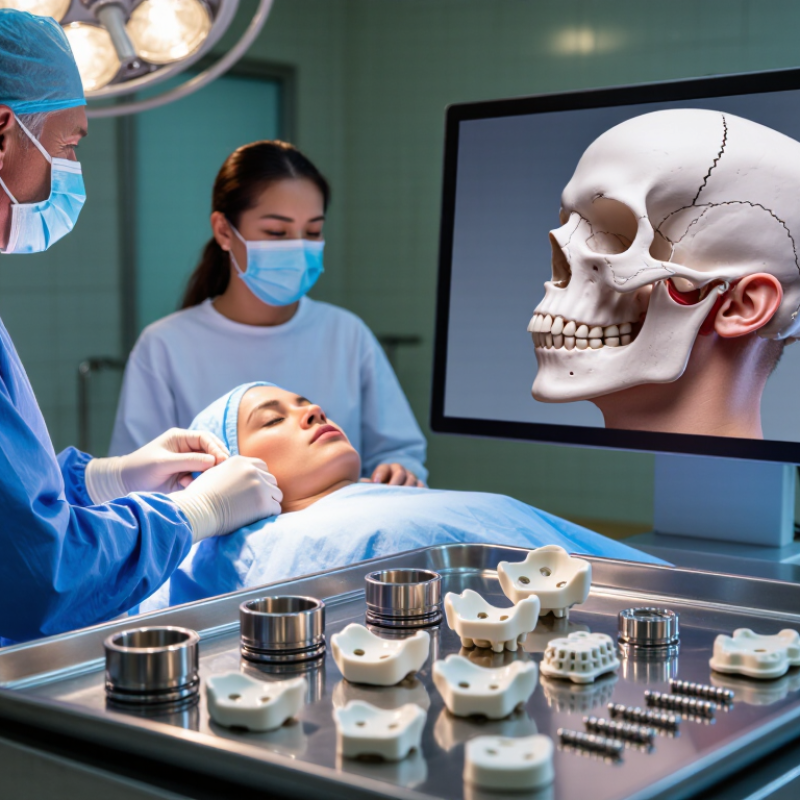
Craniofacial implants are medical devices used to restore or support parts of the skull and face. They may help rebuild contours after injury or surgery, or secure a facial prosthesis. The goal is practical. Treatment planning typically considers anatomy, skin condition, healing, and the patient’s needs. Imaging can help clinicians assess the defect and plan placement.
Common types include orbital, ear, nasal, and midface implants. Some restore missing bone contours; others provide attachment points for prostheses. Materials and designs vary, and custom options may be considered when a defect has an unusual shape. Clinical uses can include reconstruction after trauma or tumor removal, as well as care for certain congenital differences. Outcomes depend on individual factors, so an implant is not a one-size-fits-all solution.
Tips: Ask the care team how the implant will function, what follow-up is expected, and which risks apply to your case. Keep the discussion specific: healing time, skin care, and signs that need review. Small details matter. Planning can be imperfect, too; a second look at fit and expectations may prevent avoidable surprises.
Craniofacial implants may use titanium, porous polyethylene, or polyetheretherketone, depending on the defect and clinical plan. Each material behaves differently. Titanium is strong and can support bone integration when its surface is suitably prepared. Porous polyethylene is lightweight, with interconnected pores that may encourage tissue ingrowth. Polyetheretherketone is radiolucent, so it can be useful when imaging clarity matters. No material suits every patient.
Manufacturing often begins with medical imaging, which helps engineers shape an implant to a patient’s anatomy. Computer-aided design and computer numerical control machining can produce precise contours. Additive manufacturing can create complex porous titanium structures that are difficult to mill. Small details matter. Surface texture, edge finishing, and dimensional checks affect fit and handling. Processes must also be validated for cleaning and sterilization. A precise digital model can still miss the realities of surgery, such as soft-tissue tension or limited access. Still, a beautifully printed implant is not automatically a better implant. Material choice and manufacturing quality need careful review alongside the surgeon’s assessment. There is room for improvement, especially in making long-term performance easier to compare across different designs.
Comparing craniofacial implant manufacturers requires more than reviewing product catalogs. The right questions concern clinical evidence, material properties, manufacturing controls, and support for surgical planning. Small differences matter. A few millimeters can affect fit near the orbit or cheekbone, so ask how designs are checked against patient imaging and anatomical models.
Look for clear documentation on materials, sterilization, traceability, and quality inspection. Reliable manufacturers should explain how they manage design changes and handle reported product issues. Published clinical data can help, but check whether it reflects comparable procedures and follow-up periods. A glossy case image is not enough. It may show a good result without explaining complications or revisions.
Assess customization options and communication with the clinical team, including access to technical guidance during planning. Ask about production timelines, sizing tolerances, and what happens when a planned fit needs adjustment. These details are easy to overlook. A comparison table can make suppliers look neatly ranked, yet it may hide differences in evidence quality or service. I would be cautious about treating any single score as decisive; criteria should be weighted for the procedure, patient, and care setting.
A worldwide profile of ten craniofacial implant manufacturers should look beyond market visibility. One manufacturer may focus on custom implants shaped from patient imaging. Another may offer established implant systems for facial reconstruction. A third may emphasize porous materials designed to support tissue integration. Details matter. A fourth may provide a broad range of shapes and sizes, helping surgical teams plan around individual anatomy.
Other profiles reveal different strengths. A fifth manufacturer may invest in digital planning and model-based design. A sixth may prioritize material testing and documented quality controls. A seventh may serve hospitals through regional distribution and technical support. These capabilities are not interchangeable. A polished catalogue alone says little about clinical suitability.
The remaining profiles may highlight small-batch customization, surgeon education, or production systems built for consistent dimensions. A tenth may stand out for transparent product documentation and responsive service. Yet “leading” depends on the measure used: reach, research, product range, or support. Comparisons can be imperfect, especially when public information differs between companies. Buyers and clinical teams should review current specifications, evidence, and local availability before assessing any manufacturer.
Anonymized, non-ranked overview. Since company names are omitted, the entries summarize established product categories and capabilities found across the craniofacial implant market; they should not be read as company-specific claims or a ranked directory.
| Profile | Craniofacial focus | Common implant materials | Typical product formats | Typical clinical use |
|---|---|---|---|---|
| Manufacturer Profile 01 | Cranial fixation and reconstruction | Titanium and titanium alloys | Plates, screws, and mesh | Fixation of cranial bone flaps and reconstruction of cranial defects |
| Manufacturer Profile 02 | Midface and orbital fixation | Titanium and titanium alloys | Low-profile plates, screws, and orbital meshes | Stabilization of facial fractures and selected orbital reconstructions |
| Manufacturer Profile 03 | Patient-specific cranial implants | Titanium, PEEK, or other cleared implant materials, depending on the product | Custom-designed, defect-matched implants | Reconstruction of selected cranial defects using patient imaging and surgical planning |
| Manufacturer Profile 04 | Resorbable pediatric fixation | Resorbable polymer systems, where indicated and available | Plates, screws, and fixation kits | Selected pediatric craniofacial procedures; suitability depends on the device and patient |
| Manufacturer Profile 05 | Mandibular and facial bone fixation | Titanium and titanium alloys | Reconstruction plates, contourable plates, and screws | Fixation of selected mandibular and facial bone fractures or reconstructions |
| Manufacturer Profile 06 | Craniofacial osteosynthesis systems | Titanium and titanium alloys | Modular plate-and-screw systems in multiple sizes | Fixation across cranial, midface, and mandibular procedures, subject to system indications |
| Manufacturer Profile 07 | Custom facial reconstruction | Titanium or PEEK, depending on device design and regulatory clearance | Patient-specific implants and planning models, where offered | Selected complex facial defects requiring individualized contour or fit |
| Manufacturer Profile 08 | Orbital reconstruction | Titanium and other device-specific implant materials | Formable mesh, pre-shaped implants, or patient-specific designs | Repair of selected orbital floor or wall defects |
| Manufacturer Profile 09 | Small-bone facial fixation | Titanium and titanium alloys | Fine-profile plates, screws, and specialty instruments | Fixation in anatomically delicate facial regions, as specified by the system |
| Manufacturer Profile 10 | Broad cranio-maxillofacial implant portfolio | Titanium; selected portfolios may also include resorbable materials or PEEK | Fixation hardware, meshes, and selected reconstructive implants | A range of cranial and facial procedures; product availability and indications vary |
Materials, indications, regulatory clearances, and availability vary by product and market. Clinical decisions should be based on the applicable product labeling and professional judgment.
Leading craniofacial implant portfolios span patient-specific cranial implants, orbital floor plates, facial fixation systems, and porous polymer or titanium devices. Some manufacturers emphasize digital planning and custom production; others offer standardized implants for hospitals needing reliable stock. That difference matters. Grand View Research’s 2024 cranial implants market analysis estimated the global market at roughly US$1.1 billion in 2023 and projected continued growth through 2030. These figures are estimates, not audited sales rankings, and market boundaries differ between reports. A top-ten list should therefore be read as a comparison, not a definitive league table.
Global presence depends on more than factory locations. The leading suppliers typically combine regional distribution, surgeon training, and access to imaging-based planning services. North America and Europe remain established markets, while Asia-Pacific demand is growing with surgical capacity. The World Health Organization’s Global Atlas of Medical Devices documents uneven access to medical technology across countries, a useful reminder that availability does not equal equal access. Small details count: a plate must fit the defect, remain stable, and work with the surgeon’s instruments. Not every case. Product breadth can look impressive on paper, yet local service and delivery times may decide what reaches the operating room. There is no perfect ranking.
Common options include titanium, porous polyethylene, and polyetheretherketone. Each has different properties, and none suits every patient.
Titanium is strong and may support bone integration when its surface is prepared appropriately. Surface preparation matters.
It is lightweight and has interconnected pores that may encourage tissue ingrowth. The outcome still depends on the clinical situation.
It is radiolucent, which can help preserve imaging clarity. That detail may matter during follow-up.
Medical imaging can guide digital design, followed by computer-controlled machining or additive manufacturing. A digital model can still miss surgical realities.
Ask about surface texture, finished edges, dimensional checks, cleaning, and sterilization validation. Small details matter.
Look for clinical data with relevant procedures and follow-up periods. A polished case image alone says little about complications or revisions.
Ask about imaging-based design checks, sizing tolerances, production timelines, and technical guidance. Also ask how fit adjustments are handled.
Probably not. A single score can hide differences in evidence and service, so weigh criteria for the patient and procedure. I would still question how consistently those criteria are measured.
Craniofacial Implants are specialized devices used to restore or support facial structures following injury, disease, or congenital differences. This overview introduces common implant types and their clinical applications, then explains how materials such as titanium and medical-grade polymers, along with advances in digital planning and manufacturing, shape implant design and performance. It also outlines practical criteria for comparing manufacturers, including product range, material quality, customization capabilities, clinical support, regulatory compliance, and international availability.
The article profiles ten leading manufacturers worldwide without focusing on any single brand, highlighting the different product specialties and technologies found across the field. It considers how companies serve clinicians and patients in diverse regions, and how their global market presence may influence access to specialized solutions. Together, these topics offer readers a structured introduction to the craniofacial implant sector and the factors that distinguish manufacturers.
