Axiora Medical Axiora Medical

What Are the Top Types of Headless Cannulated Screws?

Time:2026-09-06 Author:Madeline
0%

Headless Cannulated Screws are widely used in orthopedic fixation when stability and a smooth implant surface matter. Their headless design allows the screw to sit beneath the bone surface, which can reduce prominence near joints. A central cannulation also supports guidewire placement and more controlled insertion. These features are valuable in small-bone, joint, and fracture procedures.

Not every screw serves the same purpose. Partially threaded screws can create interfragmentary compression, while fully threaded designs may support positional fixation. Variable-pitch threads can increase compression as the screw advances, although performance depends on bone quality, fracture pattern, and surgical technique. Some systems also offer different diameters, lengths, thread profiles, and materials. Small differences matter.

This guide explores the top types of Headless Cannulated Screws and explains where each design may be considered. It focuses on practical distinctions rather than marketing language. Surgeons typically assess imaging, fragment size, load demands, and the risk of soft-tissue irritation before selecting an implant. Manufacturer instructions and validated clinical evidence remain essential.

The terminology can be confusing.

A screw described as “compression” may not produce identical results across systems. Cannulation may also affect strength, especially in smaller diameters. That limitation deserves attention. Readers should treat this overview as educational information, not a substitute for professional judgment. With careful comparison, the right screw type can support accurate placement, reliable fixation, and a more predictable surgical plan.
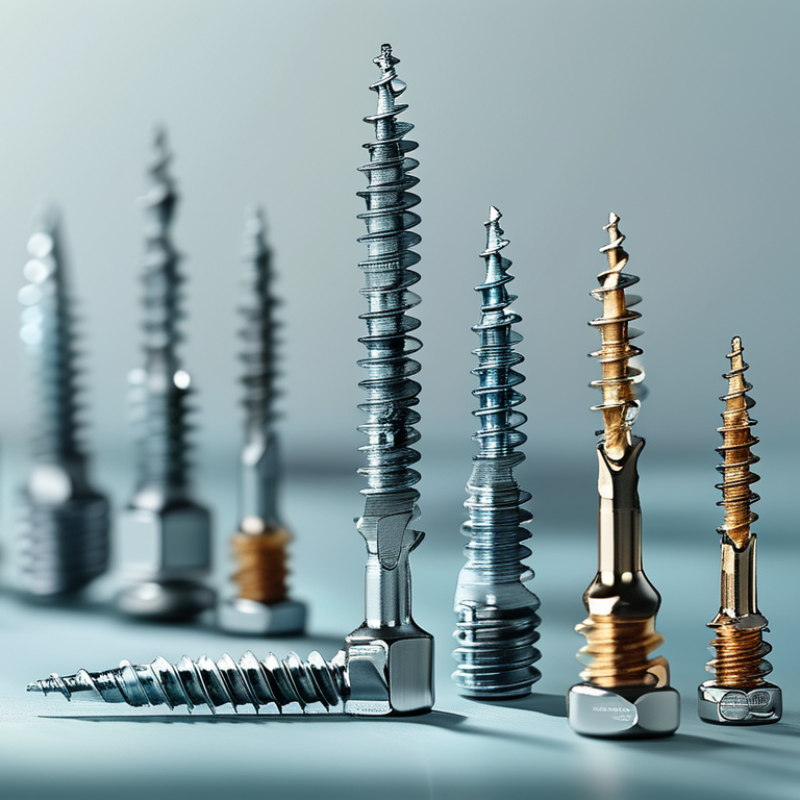
What Are the Top Types of Headless Cannulated Screws?

Classify Headless Cannulated Screws by Thread Pattern and Compression Mechanism

Headless cannulated screws are best classified by thread pattern and the way each design creates compression. Partially threaded models place threads near the tip and leave a smoother shaft behind them. The distal threads grip the far fragment while the near fragment slides, producing lag compression. This approach can close a fracture gap effectively when the near cortex permits controlled sliding. The gap matters.

Fully threaded models engage bone along most of their length and primarily provide positional stability. They can preserve length when strong interfragmentary compression might shorten or rotate a fragment. Some use uniform pitch, while others combine different pitches within one screw. Differential pitch advances two thread sections at different rates, drawing fragments together during insertion. That sounds simple, but it is not.

Variable-pitch designs may increase compression progressively as the screw crosses the fracture. Their performance depends on thread depth, bone density, fracture angle, and insertion depth. Overtightening can crush weak cancellous bone or bury the screw too deeply. Cannulation helps surgeons follow a guidewire and control the trajectory, but it does not guarantee accuracy. Imaging and tactile feedback remain important during placement. Clinical classification is useful, yet real bone rarely behaves like a diagram. Selection should match the fracture pattern, bone quality, and intended mechanical effect.

Herbert-Type Screws: Dual-Pitch Threads for Interfragmentary Compression

Among the top types of headless cannulated screws, Herbert-type screws are notable for their dual-pitch threads. This design supports interfragmentary compression while leaving the screw beneath the bone surface. One thread advances faster than the other, drawing the fracture fragments together as the screw progresses. That difference matters.

In practical use, the surgeon first prepares the canal with a guidewire and confirms its position with imaging. The screw then follows the wire through a small incision. As the headless body enters the near fragment, the opposing thread pitches can generate controlled compression across the fracture line. This is especially useful when a prominent screw head could irritate cartilage, tendons, or nearby soft tissue. Accurate measurement remains essential. A screw that is too short may not capture both fragments securely. Excessive length may penetrate an unwanted surface.

The design is not magic. Compression depends on stable reduction, suitable bone quality, correct trajectory, and careful insertion torque. Cannulation improves placement accuracy, but it does not replace anatomical judgment. In some cases, compression may become uneven if the fracture gap is irregular or the fragments rotate during tightening. Surgeons should assess imaging, fracture pattern, and healing demands before selecting this screw type. Even experienced operators may need to reconsider the plan when the intraoperative view differs from preoperative scans.

Fully Threaded Screws: Fixed-Pitch Stabilization Without Active Compression

Fully threaded headless cannulated screws provide fixed-pitch stabilization without active compression. Their threads engage both sides of the fracture, helping maintain alignment after reduction. Unlike partially threaded lag screws, they do not automatically pull one fragment toward the other as the screw advances. The result is controlled fixation rather than screw-generated compression.

In practice, the surgeon first places a guidewire across the reduced fracture. Fluoroscopy confirms its position before drilling and inserting the screw. The screw head disappears beneath the bone surface, which can reduce soft-tissue irritation and protect nearby joint movement. Thread purchase matters greatly. Poor bone quality, an inaccurate trajectory, or an unreduced gap can weaken the construct.

These screws work well when preserving the achieved reduction is the main goal. They may also support rotational stability when several screws are placed with appropriate spacing. However, they are not a substitute for careful fracture management. A fixed-pitch screw cannot reliably close a gap by itself. Additional reduction tools or compression techniques may be necessary. Small details matter. Even experienced surgeons can misjudge purchase in dense or fragile bone. Postoperative imaging and clinical follow-up remain important, because stable-looking fixation can still lose position under repeated loading.

What Are the Top Types of Headless Cannulated Screws? - Fully Threaded Screws: Fixed-Pitch Stabilization Without Active Compression

Screw Type Typical Outer Diameter Thread Configuration Compression Behavior Common Applications Key Advantages Important Considerations
Mini Fully Threaded Headless Cannulated Screw Approximately 2.0–3.0 mm Continuous, fixed-pitch thread along most or all of the threaded shaft Provides stabilization without intentional interfragmentary compression from differing thread pitches Small-fragment fixation, hand and foot fractures, osteochondral fragments, and small arthrodeses Low profile, reduced soft-tissue irritation, and suitability for limited bone stock Lower resistance to bending and torsional loads than larger-diameter screws; accurate guidewire placement is essential
Small Fully Threaded Headless Cannulated Screw Approximately 3.0–4.0 mm Uniform thread pitch with a recessed or buried head Fixed-pitch fixation; any compression generally requires reduction forceps, a lag technique, or a separate compression method Phalangeal and metacarpal fractures, selected carpal fractures, and small joint fusions Good balance between implant strength and minimally prominent fixation The screw should be fully countersunk when required to avoid joint-surface or tendon irritation
Standard Fully Threaded Headless Cannulated Screw Approximately 4.0–5.0 mm Full-length fixed-pitch thread with a cannulated central channel Maintains fragment position and resists migration; it does not actively draw one fragment toward another Malleolar fractures, tarsal and carpal fractures, osteotomies, and selected arthrodeses Reliable rotational and axial stabilization with reduced prominence compared with headed screws A separate compression technique may be necessary when fracture compression is clinically important
Large Fully Threaded Headless Cannulated Screw Approximately 5.0–7.0 mm Continuous fixed-pitch thread designed for larger bone fragments Provides fixed stabilization without the active compression mechanism associated with differential-pitch designs Large-fragment fixation, selected hindfoot procedures, osteotomies, and joint arthrodesis Higher bending and pull-out resistance than smaller screws when appropriate bone dimensions are available Requires adequate bone diameter and careful trajectory planning to reduce the risk of cortical breach
Fully Threaded Headless Screw with Self-Tapping Tip Commonly approximately 2.0–7.0 mm Fixed-pitch thread combined with cutting flutes or a self-tapping distal tip Stabilizes the fragments but does not create active compression through differential thread pitch Procedures where reduced tapping steps and efficient insertion are desirable May simplify insertion and reduce instrumentation requirements in suitable bone Insertion torque and screw trajectory must be controlled to limit fragment rotation or loss of reduction
Fully Threaded Headless Screw with Blunt or Atraumatic Tip Commonly approximately 2.0–7.0 mm Continuous fixed-pitch thread with a less aggressive distal tip Offers fixed stabilization while minimizing unintended advancement beyond the far cortex Fixation near articular surfaces or locations where soft-tissue and neurovascular protection are priorities Potentially lower risk of tip-related irritation when the far cortex or nearby soft tissues are carefully protected May require pre-tapping or a prepared pilot hole, depending on bone quality and screw design

Note: Dimensions and indications are typical design ranges rather than universal specifications. Exact diameters, lengths, thread geometry, insertion instruments, and approved uses vary by screw system and surgical technique.

Partially Threaded Screws: Distal Purchase for Controlled Fragment Compression

Partially threaded headless cannulated screws are designed for distal purchase and controlled fragment compression. Their threads engage the far fragment, while the smooth shaft crosses the near fragment. As the screw advances, the fragments can draw together. This creates compression without leaving a prominent screw head beneath cartilage or soft tissue.

The cannulated design allows placement over a guidewire. Fluoroscopy can confirm the entry point, trajectory, and screw length before drilling. Accurate depth matters. Too little thread in the distal fragment may reduce purchase, especially in softer bone. Too much thread near the fracture can prevent compression and leave a visible gap. The surgeon must match thread length to the fracture line, not simply choose the longest available option.

Partially threaded screws work best when the fracture pattern permits controlled interfragmentary compression. They may be less suitable for unstable, highly comminuted, or rotationally mobile fragments. Excessive tightening can shorten the fragment, damage delicate bone, or overcompress the joint surface. A common planning mistake is focusing on compression while underestimating rotation. Temporary wires, careful reduction, and imaging from more than one angle can reduce that risk. Even with good technique, bone quality and fracture geometry may change the result. A screw that appears ideal on the table may provide limited purchase after reduction shifts.

Compare 2.0–7.3 mm Systems Using ASTM F543 and ISO 5835 Criteria

Headless cannulated screws range from delicate 2.0 mm systems to powerful 7.3 mm systems. Their selection depends on bone size, fracture pattern, and required compression. A 2.0 or 2.4 mm screw suits small fragments and hand or foot procedures. A 3.0 or 4.0 mm system offers greater thread purchase without excessive bone removal. Larger 6.5 and 7.3 mm screws can provide strong fixation in larger bones, but their diameter demands careful entry-point planning.

ASTM F543 provides practical mechanical test methods for metallic bone screws. Testing may examine insertion torque, torsional strength, pullout resistance, and fatigue behavior. These results help compare screw designs under controlled conditions. ISO 5835 addresses mechanical requirements and test methods for metallic bone screws, especially designs with defined drive connections and thread features. However, not every headless cannulated screw matches its exact geometry. That limitation matters.

Look closely at the details. A smooth central channel supports guide-wire placement, while dual-pitch threads may create compression during insertion. The smaller systems can bend or strip if excessive force is applied. The larger systems may resist higher loads, yet they can increase local stress and complicate removal. In practical evaluation, I would record torque, fluoroscopic alignment, and final seating depth. Bench data alone is not enough. Surgical technique changes the result. Even careful comparisons have blind spots, especially when materials, thread profiles, and testing fixtures differ.

FAQS

: How are headless cannulated screws classified?

: They are classified by thread pattern and compression mechanism. Partially threaded screws create lag compression. Fully threaded screws mainly provide positional stability. The fracture gap matters.

How do partially threaded screws create compression?

Distal threads grip the far fragment. The smoother shaft lets the near fragment slide. This action closes the fracture gap. It may fail when controlled sliding is impossible.

When are fully threaded screws useful?

They engage bone along most of their length. They can preserve fragment length and reduce unwanted shortening. They are useful when strong compression could rotate a fragment. Stability is their main strength.

What makes dual-pitch screws different?

Two thread sections advance at different rates. This can draw fracture fragments together during insertion. The screw remains beneath the bone surface. The mechanism sounds simple. It is not.

What affects compression during screw insertion?

Bone density, thread depth, fracture angle, and insertion depth all matter. Stable reduction is also essential. Uneven gaps can produce uneven compression. Overtightening may crush weak cancellous bone.

Why is cannulation helpful?

A central channel allows the screw to follow a guidewire. It can improve trajectory control through a small incision. Imaging helps confirm alignment and depth. Cannulation does not guarantee accuracy.

How should screw diameter be selected?

Smaller systems suit small fragments in hand or foot procedures. Medium diameters offer stronger purchase with moderate bone removal. Larger screws suit larger bones and higher loads. Their entry points need more planning.

What should mechanical testing consider?

Testing may examine insertion torque, torsional strength, pullout resistance, and fatigue behavior. Controlled results help compare designs. Bench testing has limits. Materials, thread shapes, and fixtures can change the outcome.

What can happen if the screw is too short or too long?

A short screw may not securely capture both fragments. An excessive length may penetrate an unwanted surface. Deep seating can also increase local stress. Measurement deserves careful attention. Mistakes remain possible.

Conclusion

Headless Cannulated Screws are commonly classified by their thread pattern and compression mechanism, which determine how they stabilize and compress bone fragments. Herbert-type screws use dual-pitch threads to generate interfragmentary compression as the screw advances, making them suitable when controlled fragment approximation is important. Fully threaded screws maintain a fixed pitch along the shaft and primarily provide consistent stabilization without actively drawing fragments together. Partially threaded screws combine a threaded distal section with a smoother proximal portion, allowing distal purchase and controlled compression across a fracture or osteotomy site.

When comparing 2.0–7.3 mm systems, selection should consider bone size, fragment characteristics, insertion depth, load requirements, and the desired compression behavior. Dimensional accuracy, thread performance, torsional strength, fatigue resistance, and cannulation quality can be assessed with reference to ASTM F543 and ISO 5835 criteria. These considerations help match each screw design to the anatomical site and clinical objective while supporting reliable fixation and minimizing unnecessary disruption to surrounding bone.

Madeline

Madeline

Madeline is a dedicated marketing professional with a wealth of expertise in our company's core offerings. With a keen understanding of the industry, she brings a unique perspective to her role, consistently delivering high-quality content that highlights the superior aspects of our products. As......