Axiora Medical
1. Global Technical Evolution of Tibial Intramedullary Nails
Tibial intramedullary (IM) nailing remains the gold standard treatment for diaphyseal tibial fractures. However, the commercial and clinical landscape of IM nails is undergoing rapid technological disruption. Transitioning from traditional open surgery to minimally invasive closed reduction, modern IM nailing prioritizes immediate biomechanical stabilization, minimal disruption to the endosteal blood supply, and accelerated weight-bearing schedules.
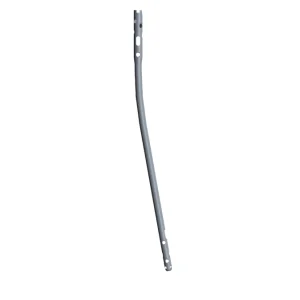
In recent years, the clinical community has shifted toward the Suprapatellar (Semi-Extended) approach. Traditional infrapatellar approaches require significant patellar tendon bending, which often correlates with chronic anterior knee pain in over 30% of post-operative patients. The suprapatellar technique avoids hyperflexion of the knee, allowing the tibia to remain semi-extended during insertion, simplifying fluoroscopic control, and significantly minimizing patellofemoral cartilage disruption. Consequently, OEM manufacturers must design specialized, longer instrumentation systems and nails characterized by dynamic proximal bend radii and multi-planar locking capabilities.
Additionally, advances in 3D patient-specific matching are influencing standard IM nail geometries. Rather than relying on simple monocentric radii of curvature, premium medical brands demand custom manufacturers supply variable-radius implants. These anatomically optimized implants match the multi-planar contours of diverse patient populations, lowering the risk of cortical penetration and malalignment.