Axiora Medical
Axiora Medical
Axiora Medical
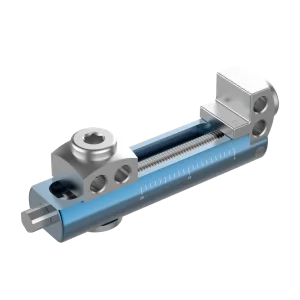
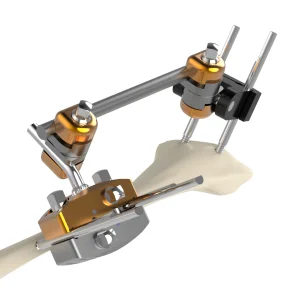
Engineered for high mechanical stability, modular setup, and easy application in acute trauma units across Cameroon. These setups fit both military field surgery and standard clinical interventions.
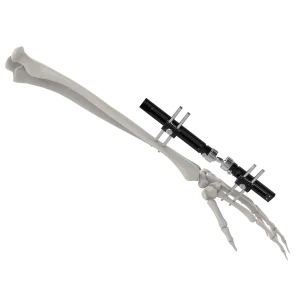
Cameroon's rapid economic growth and regional integration have dramatically increased transport networks, particularly along high-density highways such as the Douala-Yaoundé (N3) and Bafoussam-Yaoundé (N4) corridors. While this supports trade, it has also resulted in a significant rise in high-energy road traffic accidents (RTAs). These accidents frequently cause severe open musculoskeletal traumas, comminuted fractures, and soft-tissue disruptions that demand immediate surgical attention.
In major public clinical centers like the Yaoundé Central Hospital and the Douala Laquintinie Hospital, traumatologists encounter complex fracture patterns daily. However, the domestic supply chain for high-precision implants has long been dependent on expensive European imports. This high cost often delays emergency stabilization procedures.
Modular external fixators offer a critical clinical solution: they allow rapid mechanical stabilization under regional anesthesia, reducing surgical stress (the "first hit" in damage control orthopedics) without relying on intraoperative fluoroscopy in resource-limited rural clinics.
Cameroon's Ministry of Public Health (MINSANTE) is working to modernize the nation's trauma and emergency networks. The central procurement challenge remains balancing cost efficiency with strict clinical standards.
By establishing a direct supply line with certified factories, medical device distributors in Cameroon can access Class II and Class III orthopedic hardware at a fraction of Western retail prices, while maintaining compliance with ISO 13485 and CE standards.
This clinical-grade, cost-effective framework is key to improving fracture management in both urban hospitals and regional clinics across the CEMAC region.
Modern osteosynthesis relies heavily on material biocompatibility. Historically, 316L stainless steel was the industry standard for external fixator rods and clamps due to its high tensile strength and affordability. However, the market has rapidly shifted toward titanium alloys (specifically Ti-6Al-4V Grade 5).
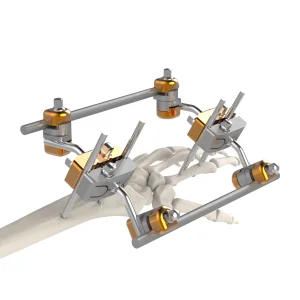
Titanium offers distinct clinical advantages: a lower density (reducing the weight of the frame for the patient), exceptional corrosion resistance, and artifact-free CT/MRI imaging. For distal radius and pediatric frames, lightweight titanium constructs improve patient mobility and comfort during extended treatment courses.
The development of multi-pin clamps, click-on couplings, and carbon fiber radiolucent rods allows surgeons to assemble customized frames rapidly. Carbon fiber components are highly radiolucent, enabling clear postoperative radiographic monitoring. This is particularly valuable for assessing bone healing and fracture alignment without visual interference from the fixator system.
Axiora Medical Technology (China) Co., Ltd. is a leading manufacturer specializing in the research, development, production, and global export of high-quality orthopedic implants and surgical instruments. Our extensive product portfolio covers trauma fixation systems, spinal implants, joint reconstruction solutions, sports medicine products, and specialized orthopedic instruments.
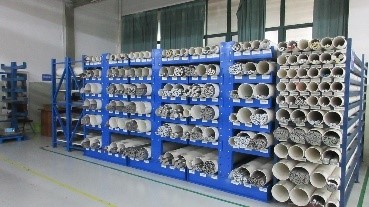
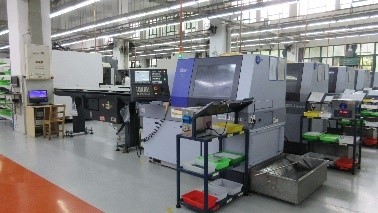
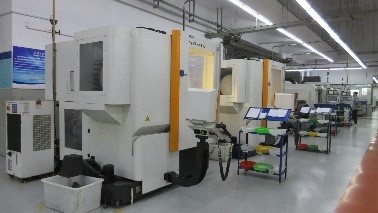
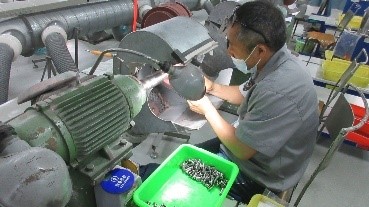
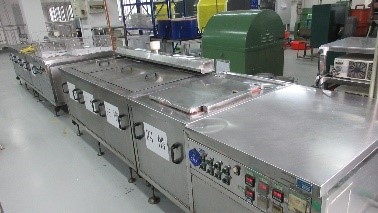
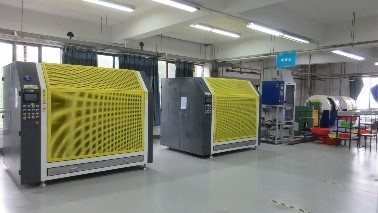
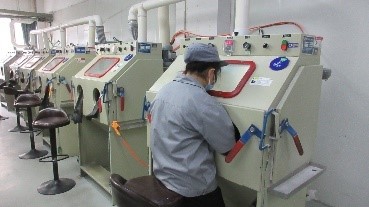
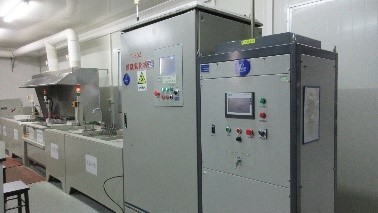
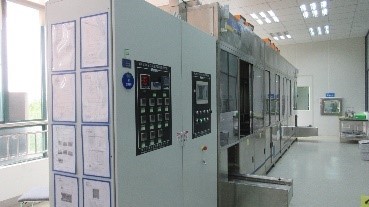
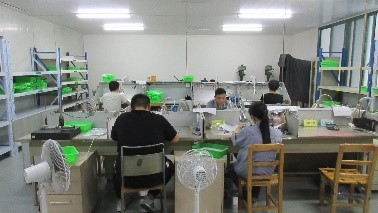
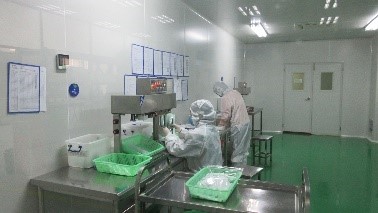
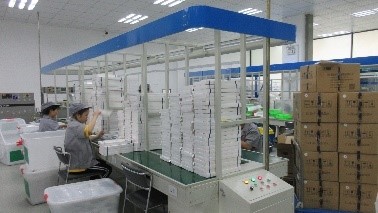
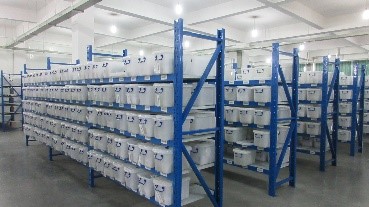
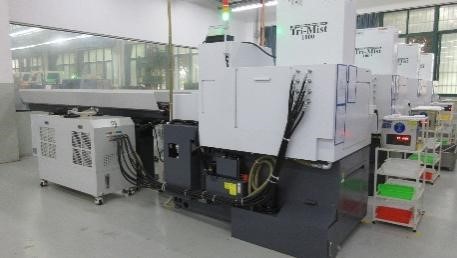
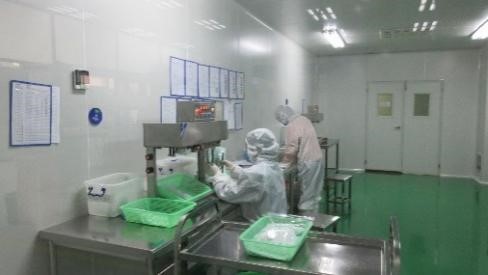
Operating from an 18,600 m² modern manufacturing facility, we integrate advanced multi-axis CNC machining centers, automated production lines, and rigorous quality management systems. This infrastructure allows us to deliver reliable, high-precision products that meet strict international regulatory standards.
| Operating Parameters | Industrial & Compliance Specifications |
|---|---|
| Company Name | Axiora Medical Technology (China) Co., Ltd. (Brand: Axiora) |
| Established & Facilities | Founded in 2017 | 18,600 m² State-of-the-Art Factory Floor |
| Quality Control Staff & Protocols | 48 QC Specialists, 100% Finished Product Inspection, 100% Incoming Material Traceability |
| Advanced Testing Methods | Coordinate Measuring Machine (CMM), Tensile Testing, Hardness Testing, Surface Roughness Inspection, Salt Spray Testing |
| Annual Export & Global Experience | USD 26 Million Export Volume | 8 Years Export History | 15 Years Industry R&D Experience |
| OEM/ODM Capabilities | Independent R&D (86 Engineers), Custom Drawings, Anodization Color Coding, Laser Branding |
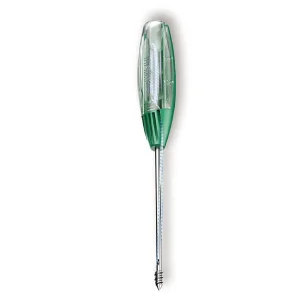
Axiora's manufacturing line uses multi-axis CNC machines and precise surface finishing processes to ensure that every clamp, rod, and Schanz screw provides reliable mechanical stability.
In semi-urban and rural areas of Cameroon (such as regional health centers in the Far North, East, or Adamawa provinces), hospitals often lack continuous power or specialized intraoperative imaging (C-arms). This makes internal fixation procedures like interlocking nailing or plating difficult to perform safely.
Direct Application: External fixation systems offer an effective alternative. They can be applied rapidly under basic imaging or palpation to stabilize fractures and control deformity. Once the soft tissue has healed, the patient can be safely referred to tertiary trauma facilities in Douala or Yaoundé.
Open limb fractures are at high risk of deep bacterial contamination. Immediate internal fixation in an contaminated wound bed can lead to chronic implant-associated osteomyelitis, which is difficult to treat and can result in limb loss.
Direct Application: Axiora's external modular fixators keep the mechanical hardware outside the infection zone. This allows surgeons to treat the open wound with repeated debridements, vacuum-assisted closure (VAC), or local antibiotic therapy while maintaining skeletal length and stability.
How Axiora is aligning manufacturing processes with global R&D pathways to deliver next-generation orthopedic care to the African continent.
The integration of micro-strain sensors into carbon fiber connecting rods represents a major advance in trauma care. These sensors monitor the load-bearing dynamic patterns of the fracture in real-time, providing clinicians with objective data to determine when a patient can safely transition to weight-bearing, which helps reduce the rate of non-union.
Pin tract infection remains a common complication in external fixation. Future designs incorporate bio-absorbable polymer coatings on Schanz pins. These coatings slowly release antimicrobial agents (such as silver ions or local antibiotics) directly into the bone-pin interface, reducing bacterial colonization and pin loosening.
Explore our wider range of orthopedic implants, sterile instruments, and power tools, built to handle complex skeletal trauma reconstruction.
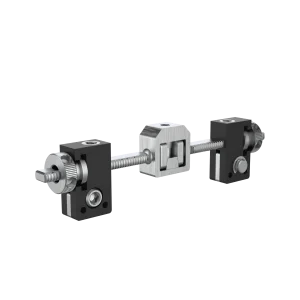
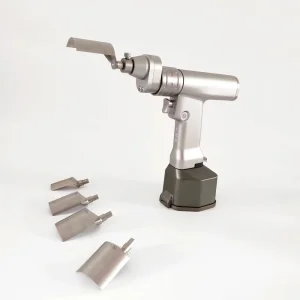
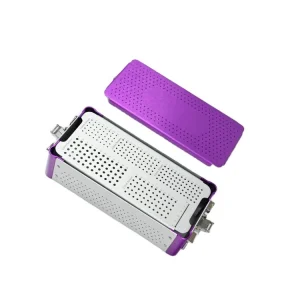
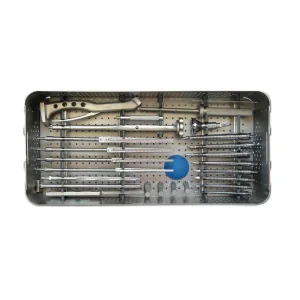
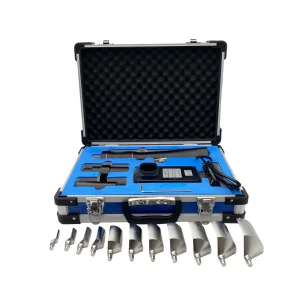
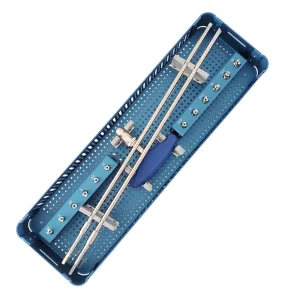
Establish a direct supply line with our Chinese manufacturing facility. We supply government procurement projects, private medical clinics, and regional distributors in Douala, Yaoundé, and across the CEMAC region with ISO 13485-compliant orthopedic systems.
Submit Quotation Request