Axiora Medical Axiora Medical

Orthopedic Instrument Suppliers & Exporters in the Milan Market

Precision Surgical Solutions for Lombardy's Leading Clinical Institutions & Global Healthcare Networks

Send Inquiry Now

Industrial Blueprint: Milan's Orthopedic Surgical Ecosystem

Deep-dive research on how local procurement guidelines, MDR compliance, and advanced bio-materials shape the regional medical network.

Milan's Local Commercial & Clinical Status

Milan stands as the economic core of Italy’s Lombardy region, hosting one of Europe's most advanced healthcare clusters. Key institutions like the IRCCS Istituto Ortopedico Galeazzi and the ASST Grande Ospedale Metropolitano Niguarda set global standards in spinal surgeries and complex joint reconstructions. The Milanese orthopedic market is highly demanding, prioritizing bio-compatible materials (such as PEEK and Titanium Alloy Grade 5) and instruments that optimize surgical workflow efficiency.

Local procurement processes are governed by strict European Union Medical Device Regulations (EU MDR 2017/745), requiring surgical instrumentation to exhibit complete traceability, biocompatibility, and impeccable surface finishes. Suppliers must demonstrate robust sterilization capacities, validated manufacturing steps, and precise customization metrics to integrate into regional supply networks.

Global Supply Chain Integration

Globally, the demand for orthopedic instruments is expanding due to aging populations, increased participation in sports, and the technological transition toward minimally invasive surgery (MIS). As a premier global exporter, Axiora Medical Technology plays a vital role by bridging top-tier raw materials and precision-engineered machining with European medical device distributors.

Our global supply operations focus on reducing lead times for critical surgical components. By pairing advanced production capabilities in China with standard distribution channels in key locations like Milan, we ensure healthcare providers receive trauma plates, spine cages, and osteotomy solutions that meet international regulatory and quality criteria.

Technological Development Trends

The orthopedic device industry is undergoing rapid technical evolution. Key trends driving the market forward include:

  • Smart Bio-materials: Transitioning from standard stainless steel to premium titanium alloys and high-grade Polyetheretherketone (PEEK) to achieve modulus of elasticity values closer to natural human bone.
  • Low-Profile Design Aesthetics: Reducing anatomical interference and soft-tissue irritation through rounded edge plates and locking mechanisms.
  • Customized Patient-Specific Instrumentation (PSI): Providing customized solutions according to patients' anatomical dimensions, utilizing state-of-the-art reverse engineering and rapid prototyping.
  • Surface Optimization: Utilizing specialized anodizing processes to provide color-coded ease-of-use inside surgical theatres, alongside improving biocompatibility.

Excellence in Precision Engineering

Quantifying our manufacturing scale, research initiatives, and international footprint.

18,600 m²
Modern Factory Footprint
86
Dedicated R&D Engineers
100%
Quality Control Rate
126
New Products Launched (Last Year)

Clinical Solutions & Technical Roadmaps

Translating metallurgical and structural engineering into safe surgical outcomes.

Trauma Fixation Systems

Providing low-profile distal radius plates, specialized ulnar osteotomy systems, and micro locking bone configurations to address complex articular fractures. Minimizes soft-tissue irritation and promotes early post-operative mobilization.

Spinal Fusion Technologies

Utilizing implant-grade PEEK and medical-grade titanium to manufacture TLIF/PLIF cages with specialized surface roughness that accelerates osseointegration and maintains long-term disc height stability.

Anatomical Reconstruction

Engineered plate sets for specialized anatomies, such as rib osteosynthesis structures and distal radius locking modules. Features pre-contoured profiles based on extensive clinical data.

Clinical Reliability & Quality Testing Protocols

In the medical device industry, reliability is paramount. Our Quality Assurance protocol relies on an end-to-end trace framework from incoming raw titanium bar inspection to packaging verification. By deploying advanced testing equipment, we analyze dimensional conformity down to a micron scale.

Key testing parameters include Coordinate Measuring Machine (CMM) dimensional analysis, tensile strength evaluations to verify plastic deformation points, hardness testing (Vickers/Rockwell) to guarantee mechanical wear resistance, and surface roughness checking to ensure optimal tissue interaction.

Axiora Medical Technology — Enterprise Operations Profile
Company Name Axiora Medical Technology (China) Co., Ltd.
Established Year & Experience Established in 2017 | 15 Years Industry Experience | 8 Years Export Experience
Manufacturing Infrastructure 18,600 m² Facility | Advanced CNC Machining & Longitudinal Cutting Lathes
Annual Export Revenue USD 26 Million
Supply Chain Partnerships 1,120 global partners and supply chain nodes
Quality Inspection Framework 100% finished product inspection using CMM, Tensile, Hardness, and Salt Spray Testing
Dedicated Human Capital 86 R&D Engineers | 48 Quality Control Staff
R&D Capabilities Independent product development, reverse engineering, customizable OEM/ODM options (Logo, packaging, structural design)

Need MDR-Compliant Orthopedic Instruments in Milan or Globally?

Connect with our technical engineers to discuss detailed specifications, custom OEM drawings, or regulatory documentation sets.

Initiate Procurement Request

Precision Step-by-Step Production Process

How we manufacture top-tier titanium trauma plates and spinal systems from raw material to final sterile delivery.
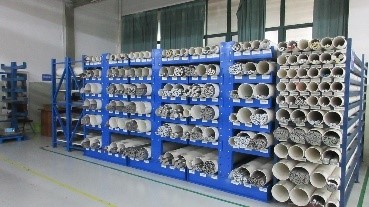
Raw Material Inspection for Orthopedic Instruments
Raw Material Verification
Longitudinal Cutting of Titanium Bars
Longitudinal Cutting
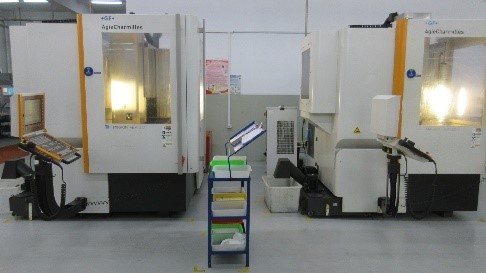
Precision CNC Machining
CNC Precision Milling
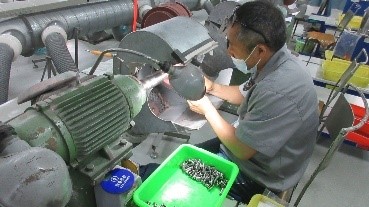
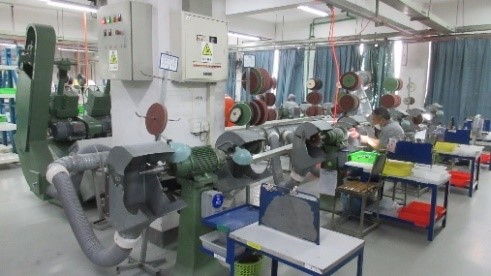
Polishing Orthopedic Trauma Plates
Surface Polishing
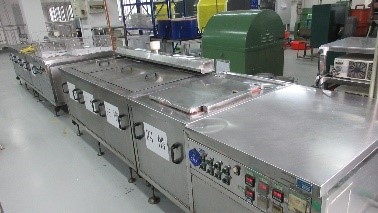
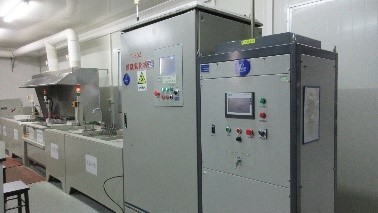
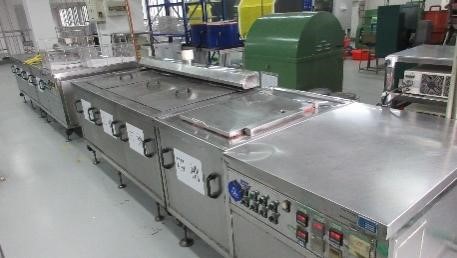
Ultrasonic Washing Stage 1
Ultrasonic Washing 1
Plate Grinding Process
Plate Grinding
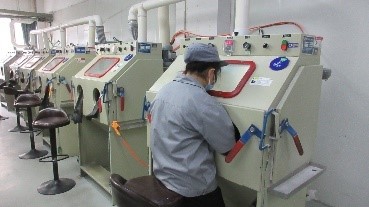
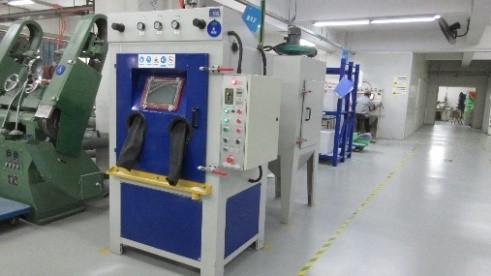
Sand-Blasting of Metallic Surface
Sand-Blasting Treatment
Penetrant Testing for Microdefects
Penetrant Testing
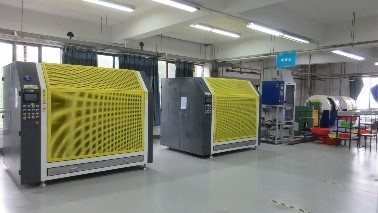
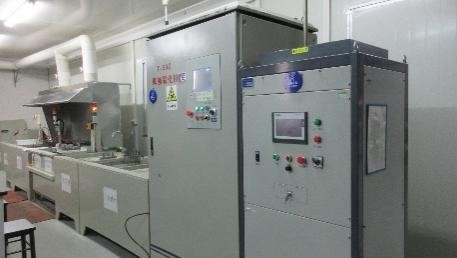
Color Anodizing Unit
Titanium Anodizing
Ultrasonic Washing Stage 2
Ultrasonic Washing 2
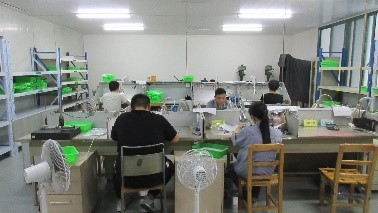
Outcoming Quality Control OQC
OQC (Final Inspection)
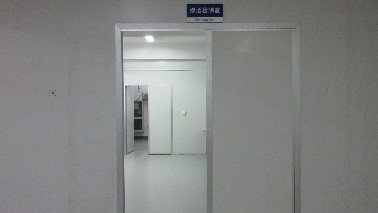
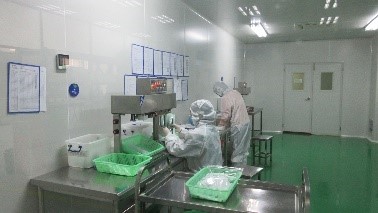
Aseptic Packing Room Facility
Aseptic Packing Room
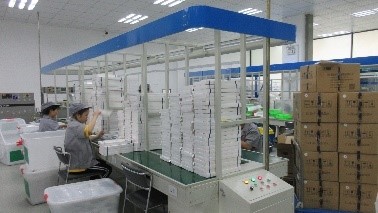
Packing Line Processing
Packing Line
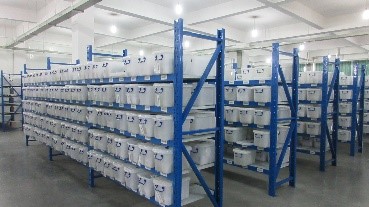
Sterile Inventory Storage
Inventory Storage
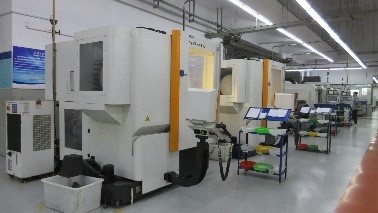
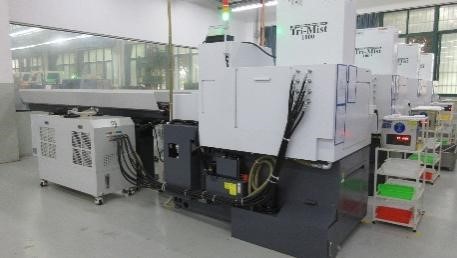
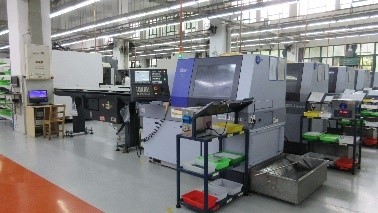
Longitudinal Cutting Lathe Machinery
Cutting Lathe Unit
CNC Machining Core
CNC Core Center
Automatic Polishing Machine
Polishing Systems
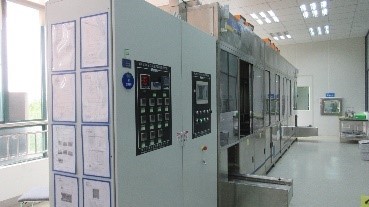
Ultrasonic Washing Unit Complex
Ultrasonic Complex
Precision Grinding Machine
Precision Grinding
High-Throughput Sand-Blasting Machine
Sand-Blasting Machine
Electrolytic Anodizing Machine
Anodizing Station
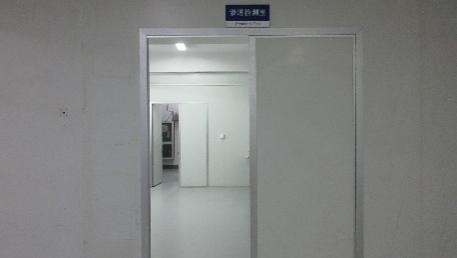
Certified Penetrant Testing Room
Penetrant Testing Room
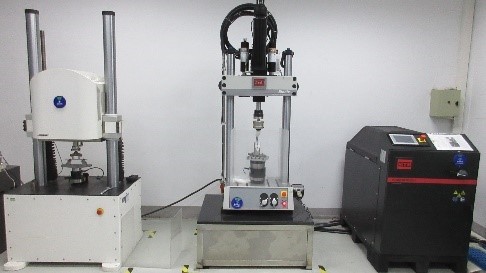
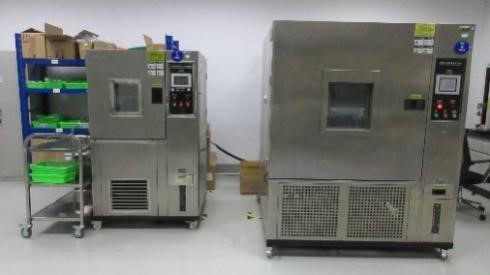
Endurance Fatigue Tester
Endurance Tester
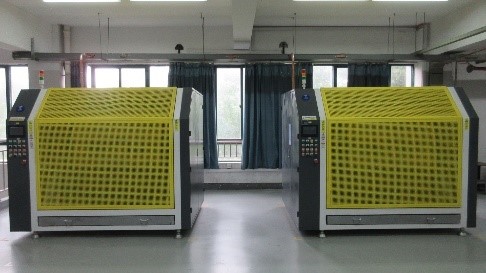
Environmental Aging Tester
Aging Tester

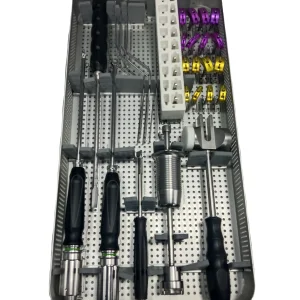
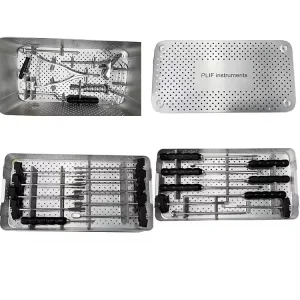
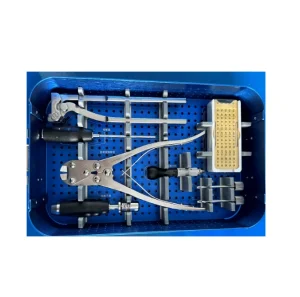
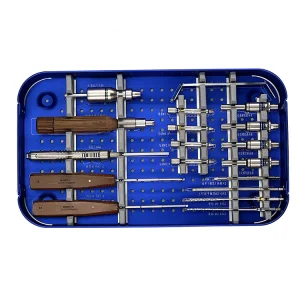
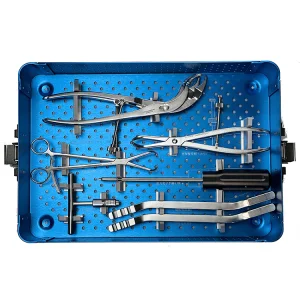
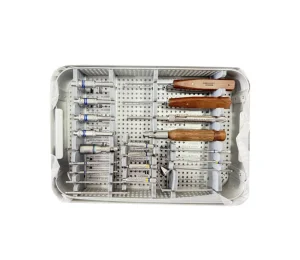
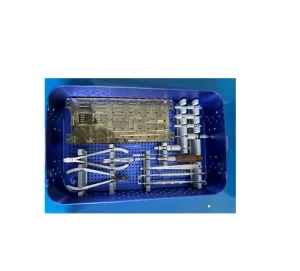
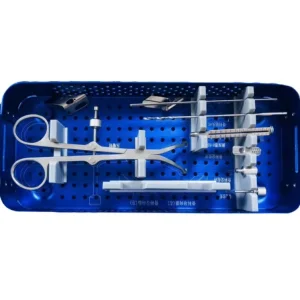
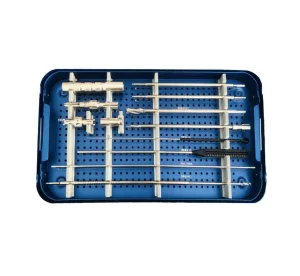
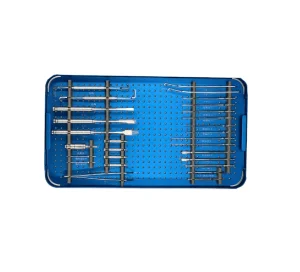
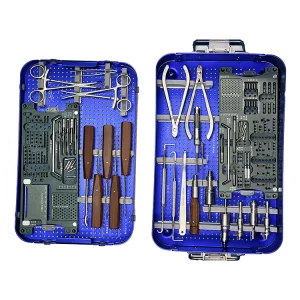
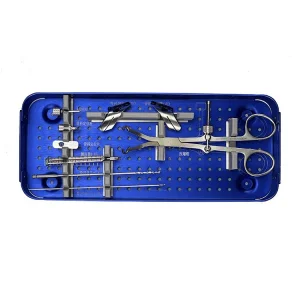
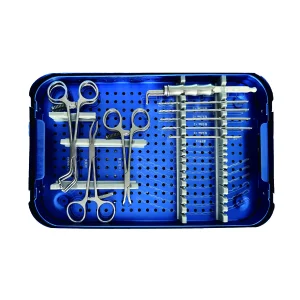
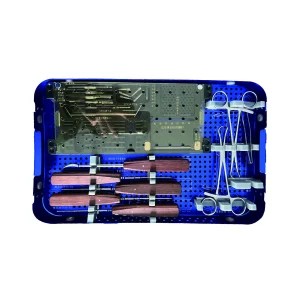
Trauma & Micro-Fixation Specialized Instruments

Detailed product specifications designed for extremity surgeries, osteotomy corrections, and anatomical stabilization.
Expert Q&A: Sourcing & Compliance Protocols

Technical guidance for medical device importers, distributors, and procurement teams looking to purchase orthopedic instruments.
Q1: What are the main regulatory requirements for exporting orthopedic instruments to Milan, Italy?
To export medical devices to Milan and the broader Italian market, manufacturers must strictly comply with the European Union Medical Device Regulation (EU MDR 2017/745). Implants fall into Class IIb or Class III categories, demanding comprehensive clinical evaluation reports (CER), certified ISO 13485 Quality Management Systems, and registering the devices in the European Database on Medical Devices (EUDAMED). All imported hardware must feature a clear CE marking to confirm clinical compliance.
Q2: Why is Titanium Alloy (Grade 5) preferred over stainless steel in trauma and extremity plates?
Titanium Alloy (specifically Ti-6Al-4V ELI, ASTM F136) offers a superior strength-to-weight ratio and a modulus of elasticity that is closer to human cortical bone than stainless steel. This similarity reduces "stress shielding," where the implant absorbs all the load, preventing the surrounding bone from healing properly. Furthermore, titanium exhibits excellent biocompatibility and forms a stable passive oxide layer that resists corrosion in bodily fluids.
Q3: How does Axiora support OEM/ODM customization for Milanese hospital tenders?
Axiora Medical offers end-to-end customization services, including reverse engineering from physical samples, CAD drafting based on surgical specifications, custom logo etching, sterile package design, and custom anodization color-coding. Our facility houses 86 R&D engineers to ensure the customized products match both mechanical thresholds and localized clinical protocols.
Q4: What testing procedures guarantee the durability of PEEK spinal cages?
PEEK (Polyetheretherketone) implants undergo rigorous mechanical tests under ASTM standards, including static and dynamic axial compression tests, shear testing, and fatigue life verification to simulate multi-year biomechanical cycles. In addition, our QA team subjects PEEK cage components to raw-material purity checks and coordinate measurement inspections to ensure precise cage-to-inserter interfaces.
Q5: What is the typical lead time and supply chain layout for European orders?
Standard OEM shipments have a lead time of 30 to 45 days, depending on batch sizes and custom configuration requirements. We work with international logistics providers to ensure timely customs clearance and delivery to European distribution centers, providing complete shipping documentation and certificate validation at every stage.